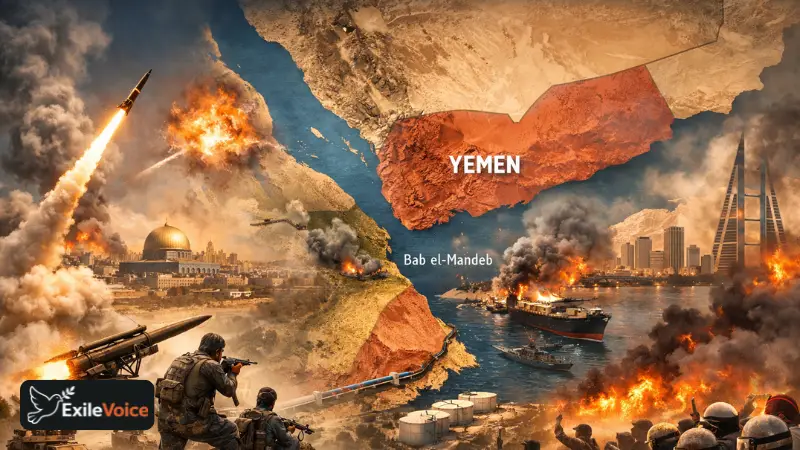
The geopolitical landscape of the Middle East has undergone a seismic shift as Yemen’s Houthi rebels officially entered the fray of the ongoing conflict involving Iran, Israel, and the United States. This escalation was marked by the launch of a long-range ballistic missile from Yemeni soil targeting Israel, signifying a broadening of the battlefield that extends far beyond the immediate borders of the Levant. While the direct impact of the missile is a significant military milestone, the strategic implications for global energy security are far more alarming.
Central to this development is the Houthis' geographical command over the Bab el-Mandeb Strait. This maritime chokepoint is a critical artery for global trade and, specifically, for Saudi Arabian oil exports. Traditionally, the international community focused on the Strait of Hormuz as the primary vulnerability for oil transit. In response to Iranian threats in Hormuz, Saudi Arabia invested heavily in a cross-country pipeline infrastructure designed to transport oil to the Red Sea coast, allowing tankers to bypass Hormuz and exit via the Bab el-Mandeb.
The Houthis’ active participation in the war effectively "pinches" both ends of the Saudi energy corridor. With their proximity to the shipping lanes in the Red Sea, Houthi forces now possess the capability to disrupt or halt the flow of oil that was previously considered safe from Iranian interference. This creates a "double-chokepoint" scenario that could cripple Saudi oil exports and send shockwaves through global energy markets.
Furthermore, the domestic stability of neighboring Gulf states is being tested. In Bahrain, where a significant majority of the population shares religious ties with Iran, civil unrest is reportedly reaching a boiling point. Reports of clashes between protesters and security forces suggest that the regional conflict is bleeding into internal sectarian tensions. If Bahraini stability falters, it provides Iran with a strategic foothold directly across from Saudi Arabia’s Eastern Province, further complicating the US-led security architecture in the region. The entry of Yemen into the war is not merely a localized skirmish; it is a calculated move that places the world’s energy lifeline under a direct and immediate threat.