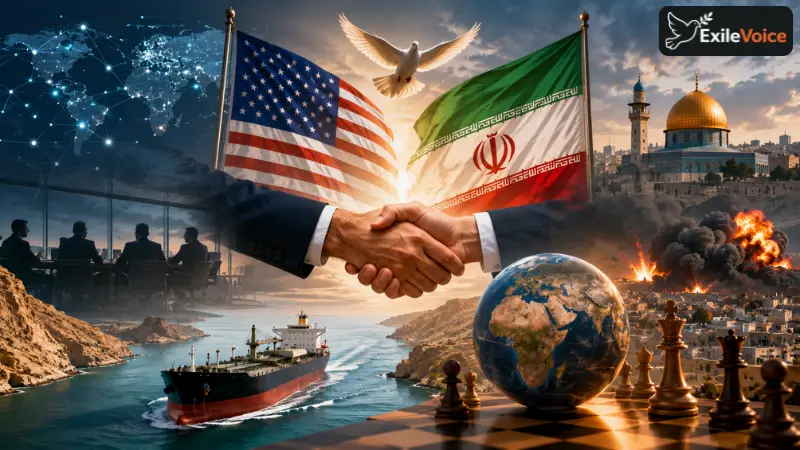
The formal announcement of a comprehensive diplomatic breakthrough between the United States and the Islamic Republic of Iran marks a historic juncture in modern international relations. Following months of high-stakes, back-channel negotiations facilitated by neutral intermediaries, the confirmation of this wide-ranging peace deal has sent positive shockwaves through global commodity markets, maritime transport networks, and sovereign intelligence corridors. Initially broken by regional news channels and rapidly verified by high-level diplomatic confirmations across Washington and Tehran, the resolution represents an extraordinary structural realign in international diplomacy. For decades, the geopolitical friction between the United States and Iran served as a persistent fault line, threatening to destabilize global trade and draw multi-state coalitions into catastrophic conventional warfare.
At the core of this historic settlement is a series of meticulously sequenced reciprocal concessions aimed at de-escalating military posture while restoring a baseline of fiscal and infrastructural normalcy. The immediate operational priority of the accord is the formal, guaranteed reopening of the Strait of Hormuz within a definitive thirty-day window. Under the negotiated terms, the critical maritime chokepoint will return to operational normalcy under a recognized administrative framework where Iran retains localized regulatory oversight. This development marks a profound shift from the pre-conflict status quo. The strategic architecture of the Strait of Hormuz dictates that it operates essentially as a restricted maritime corridor bordered closely by the sovereign territories of Oman and Iran. Through this narrow gateway flows more than twenty percent of the world’s petroleum consumption, rendering its unhindered navigation vital to global economic security.
By formalizing Iran's administrative role along this strategic trade path, the agreement inadvertently alters the regional balance of leverage. Historically, the passage was treated as a shared international resource with minimal regulatory interference. Under the new architecture, the international community effectively acknowledges a heightened level of localized jurisdiction. Diplomatic reports indicate that while overt commercial tolling may be deferred to avoid immediate international litigation, mechanisms such as environmental protection levies and localized safety coordination frameworks are actively being considered. This institutionalization of maritime oversight significantly elevates Tehran's regional standing, introducing a complex layer of administrative authority over deep-water assets that directly impact neighboring hydrocarbon-exporting states, including Saudi Arabia, the United Arab Emirates, Kuwait, and Iraq.
Financially, the peace accord outlines an immediate and structured unwinding of the extensive international sanctions regime that has severely restricted the Iranian domestic economy for years. The initial phase of the agreement mandates the immediate release of approximately twelve billion dollars in frozen sovereign assets, representing roughly half of the total Iranian funds currently restricted within international banking institutions due to unilateral and multilateral sanctions. The remainder of these frozen financial reserves is scheduled for systematic liquidation and transfer within a strict sixty-day probationary period. This release of capital is legally bound to the verification of compliance measures concerning Iran's nuclear infrastructure and enrichment capabilities.
Crucially, the accord secures a renewed, verifiable commitment from Tehran to halt the development of weaponized nuclear capabilities, a concessions package that echoes the fundamental tenets of the 2015 Joint Comprehensive Plan of Action but features significantly enhanced oversight protocols. To ensure rigorous adherence, the International Atomic Energy Agency is slated to receive unprecedented, unhindered monitoring access to domestic enrichment facilities, providing the structural verification necessary to reassure Western stakeholders and stabilize regional security perceptions.
Simultaneously, the geopolitical fallout of this bilateral understanding is reverberating through the broader Middle East, exposing deep operational fissures between Washington and its traditional regional allies. The State of Israel has openly signaled its profound dissatisfaction with the diplomatic compromise, viewing the relaxation of economic restrictions on Tehran as a strategic threat that preserves Iran's regional proxy infrastructure. International diplomatic reports indicate that Israeli defense officials consider their state an independent non-party to the bilateral agreement, asserting their sovereign right to conduct pre-emptive kinetic operations to secure their borders. This stance was underscored by immediate military strikes targeting operational hubs in Beirut, Lebanon, a development that drew sharp, public condemnation from US leadership, who categorized the escalation as a deliberate attempt to undermine the fragile Swiss-brokered diplomatic framework.
The divergence highlights a fundamental reality of the new accord: while it successfully mitigates direct conventional warfare between major state actors, it does not automatically dissolve the entrenched proxy conflicts that define the Levant and the broader Arab world. The longevity of the peace deal will ultimately depend on the capacity of international oversight mechanisms to manage these localized escalations and prevent secondary theater conflicts from triggering a wider collapse of the core diplomatic architecture.