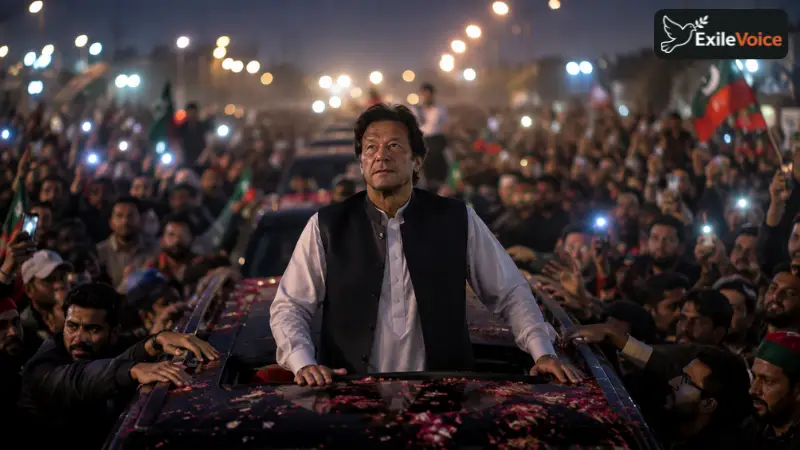
The recent transfer of former Pakistani Prime Minister Imran Khan from prison to a hospital triggered a wave of public reaction that transcended traditional political dynamics, highlighting his unique status in Pakistan’s sociopolitical landscape. Despite various attempts to marginalize his influence, the intensity of public support displayed during his brief transit, captured by both local and international media, illustrates a deeper, enduring connection between Khan and the Pakistani populace.
Analysts observe that the global coverage of his transit, reported by outlets ranging from the New York Times to Al Jazeera, underscores that Khan’s influence has moved beyond conventional politics. While mainstream media often focuses on policy and governance, Khan has become a cultural phenomenon, a "national hero" whose appeal has been cultivated over decades, starting from his sports career and philanthropic endeavors long before he entered politics.
The core of this phenomenon lies in what many define as "Pakistaniyat", an identity that Khan has come to symbolize for a large segment of the population. This bond is characterized by a level of emotional investment that transcends standard partisan loyalty. Supporters view him as a symbol of resistance against established systems that have historically dominated the country. The public’s reaction, ranging from people lining the streets with flowers to youth waiting on highway bridges for a glimpse of his convoy, is described as a rejection of imposed political narratives.
Furthermore, the video highlights that critics often mistake this level of engagement for coordinated propaganda or "bought" support. However, the organic nature of these demonstrations, occurring deep into the night, suggests a grassroots intensity that cannot be manufactured through traditional political machinery. Even as his opponents and certain elements within the establishment express frustration, the persistent public adoration remains an undeniable, if complicating, factor in Pakistan's political future. The narrative surrounding Khan is now less about his tenure as Prime Minister and more about his role as a central figure in a long-standing national struggle, where his personal resilience is mirrored by the fervor of his base.