The recent address by President Trump, intended to calm an increasingly restless American public, appears to have achieved the opposite effect. Originally designed to project confidence and highlight military successes, the speech has instead triggered a volatile reaction across global financial markets. The primary driver of this instability is the administration's hardline stance on Iran and the strategic dismissal of the Straits of Hormuz as a vital corridor for American interests.
During the address, President Trump issued a severe ultimatum to Tehran, threatening to push the nation back to the "Stone Age" if a diplomatic agreement is not reached within a narrow three-week window. This rhetoric, reminiscent of post-9/11 coercive diplomacy, was coupled with a declaration that the United States no longer relies on the 20% of global oil that traverses the Straits of Hormuz. By citing domestic production and Venezuelan reserves as sufficient alternatives, the administration attempted to decouple U.S. energy security from Middle Eastern stability.
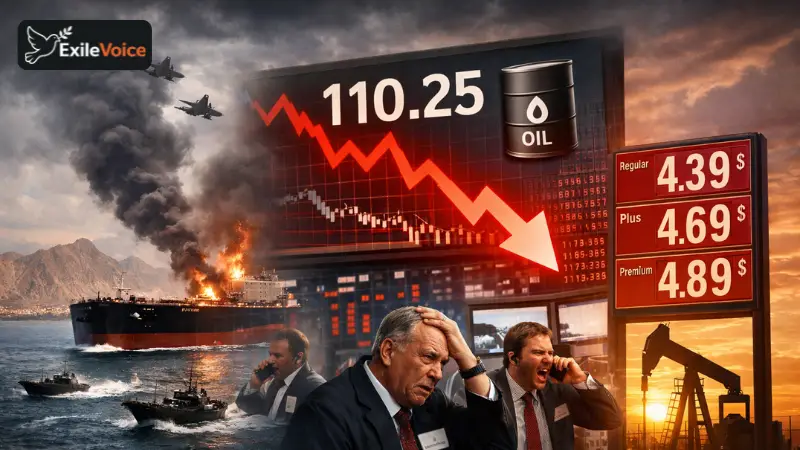
However, the market's reaction was swift and unforgiving. Economic analysts note that oil is a fungible global commodity; even if the U.S. does not physically import oil through Hormuz, any supply disruption there spikes global prices, which inevitably reflects at American gas pumps. Almost immediately following the speech, Brent crude surged past the $110 per barrel mark, erasing earlier gains made on hopes of a ceasefire. The domestic impact is already being felt, with average U.S. gasoline prices climbing above $4 per gallon, heightening public anxiety.
Furthermore, the "backfire" extended to the financial sector. Within twenty-five minutes of the nineteen-minute speech, approximately $550 billion in market value evaporated from U.S. stock exchanges. Investors viewed the lack of a clear ceasefire framework and the aggressive posturing as a harbinger of prolonged regional conflict. This economic "aftershock" suggests a significant disconnect between the administration’s political messaging and the reality of global trade interdependencies. As the U.S. intelligence community suggests that Iran remains uninterested in the current terms of negotiation, the risk of a "Stone Age" escalation remains a looming threat to global economic recovery.