The global energy landscape is currently facing a period of unprecedented volatility as the geopolitical standoff in the Middle East intensifies. Recent statements from the United States administration have signaled a significant shift in how international maritime trade routes, specifically the Strait of Hormuz, are to be policed and protected. President Donald Trump has overtly challenged the traditional role of the U.S. Navy as the sole guarantor of safety in these waters, suggesting instead that nations most dependent on the fuel passage should take the lead in its protection.
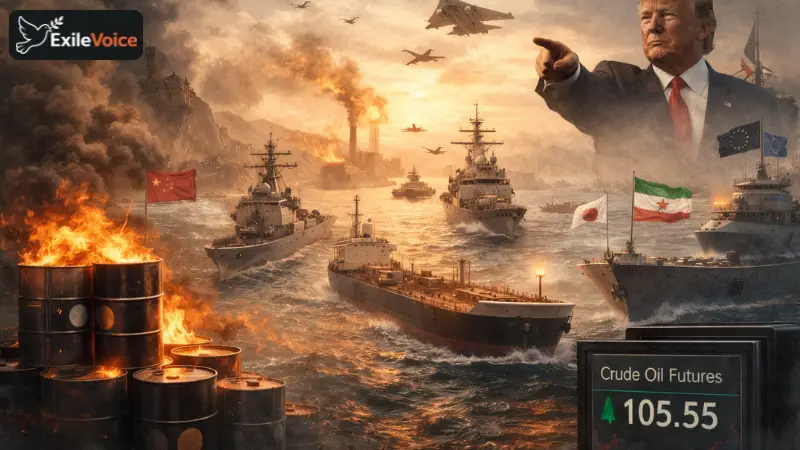
This "pay-to-play" or "partnership-led" security model has sent shockwaves through global markets. The Strait of Hormuz remains the world’s most important oil transit chokepoint, with a significant portion of the world's liquefied natural gas and oil passing through it daily. By suggesting that countries like China, Japan, and various European nations should deploy their own military assets to "guard and cherish" their energy interests, the U.S. is effectively pivoting away from a century-old maritime security framework.
The immediate economic impact has been a sharp spike in crude oil futures. Analysts note that market participants are pricing in the "risk of the unknown." If the U.S. reduces its stabilizing presence without a coordinated international task force ready to take its place, the potential for localized skirmishes or full-scale blockades increases exponentially. This uncertainty has already translated to the retail level in developing economies like Pakistan, where fuel prices are reaching historic highs, nearing 500 PKR per liter for diesel and nearly 450 PKR for petrol.
Furthermore, the administration’s rhetoric toward Iran remains a study in contradictions. On one hand, there are calls for a "grand deal" and a desire to see a prosperous, liberated Iran; on the other, there is the threat of kinetic action that could "revert the nation to the stone age." This dual-track approach of extreme pressure combined with an open invitation for negotiations has historically led to tactical stalemates rather than diplomatic breakthroughs.
For international businesses and state actors, the takeaway is clear: the era of subsidized maritime security provided by the American taxpayer is transitioning. Nations must now consider the high cost of military naval deployments as a standard part of their energy procurement budgets. The "Trump Doctrine" in 2026 is less about isolationism and more about the forceful delegation of global responsibilities, a shift that may redefine international relations for the next decade.