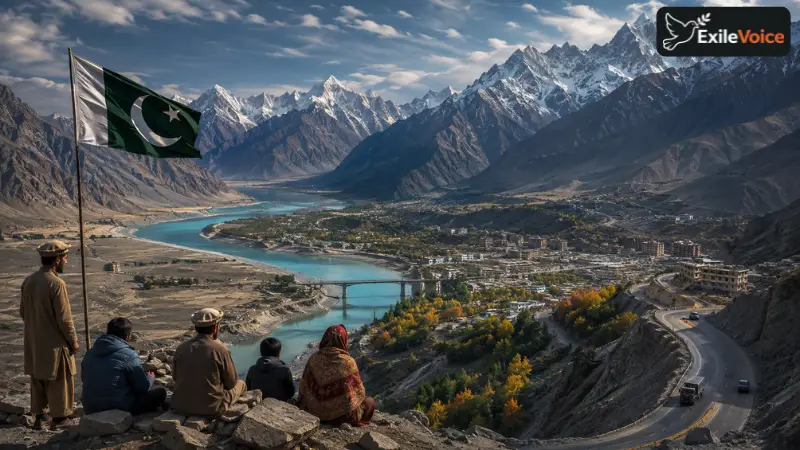
The political landscape of Pakistan is often analyzed through the prism of major urban centers, yet the mountainous region of Gilgit-Baltistan (GB) holds a disproportionate level of strategic, geopolitical, and historical importance. Recently, discussions have intensified regarding the political future of this region, particularly as it heads toward local and provincial elections. A deep dive into the historical perspectives of former Prime Minister Imran Khan reveals that his engagement with GB was not merely a modern political maneuver but rooted in a profound intellectual endeavor from his pre-political life.
In his book "Indus Journey," written in the early 1990s, Imran Khan documented his travels across Pakistan, including a detailed exploration of what were then known as the Northern Areas. Unlike many contemporary political figures whose interest in the region is confined to election cycles, Khan’s writing suggests a genuine effort to understand the historical narrative, the diverse cultures, and the complex geopolitical dynamics of the area. He recognized the significance of the region’s geography, situated at the intersection of the Karakoram Highway and bordering China, India, and Afghanistan.
The current political atmosphere in Gilgit-Baltistan is characterized by a highly politically conscious youth and an educated electorate. Unlike areas where voting patterns are often dictated by patronage or familial loyalties, the people of GB demonstrate a pragmatic and informed approach to the electoral process. This makes the region a critical barometer for political trends. The push for provincial status, initiated by Khan’s administration, signaled a recognition of the region's unique status and its role as a key element of the China-Pakistan Economic Corridor (CPEC).
However, the region’s future is clouded by the administrative "hard state" approach often favored by policymakers in Lahore or Rawalpindi. Experts argue that the strategic importance of GB, governing security, water resources, and international boundaries, requires a more nuanced, inclusive, and sensitive governance model rather than the coercive methods applied in other provinces. The current leadership, including those with experience in the Force Command Northern Areas (FCNA), possesses the requisite local knowledge. The challenge lies in transitioning from viewing the region purely through a security lens to respecting and integrating its educated and politically active population into the national mainstream. Neglecting these dynamics or imposing decisions without local consent risks alienating a vital western flank of the country, potentially fostering deep-seated resentment that could have long-term national security implications.