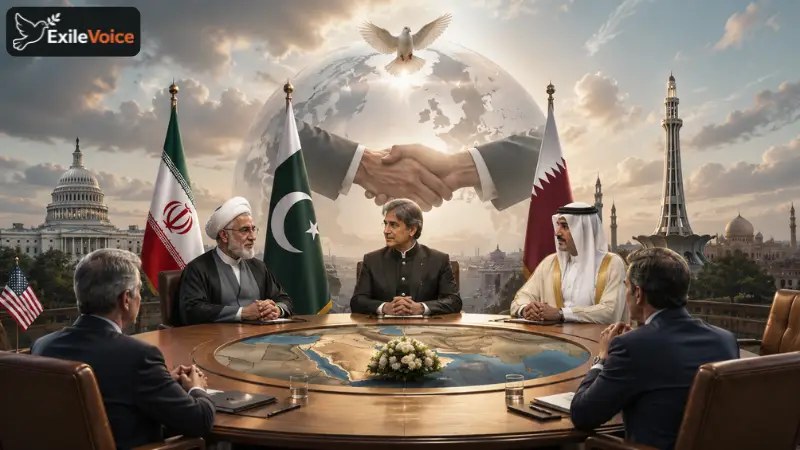
The recent diplomatic developments involving Iran, the United States, and regional mediators have highlighted Pakistan’s nuanced role in global geopolitics. Despite being a subject of intense regional scrutiny, Pakistan has played a pivotal role in facilitating communication between Iran and Western powers. This involvement is not merely a diplomatic exercise but a strategic balancing act.
The video underscores that while some regional actors, particularly those in the Indian media, have attempted to downplay or criticize Pakistan’s contributions, the reality on the ground, validated by international diplomatic channels, tells a different story. The recent visit of the Iranian President to Pakistan, shortly after his inauguration, serves as a testament to the strengthening confidence between the two nations despite historical ups and downs.
Furthermore, the role of mediators like Qatar, alongside Pakistan, indicates a multi-pronged diplomatic approach. While skeptics argue that Pakistan’s influence is minimal, the evidence, including joint statements issued by Pakistan and Qatar’s foreign ministries, suggests a coordinated effort to manage regional tensions. This is significant given that the region has seen volatile shifts, including missile exchanges and ongoing conflicts that have persisted for over a hundred days. The ability of Pakistan to maintain a seat at the table, despite domestic political instability, demonstrates the resilience of its state-level foreign policy, which often operates independently of, or persists through, internal administrative changes.
Ultimately, the goal of this diplomacy is to prevent further regional escalation and ensure that local powers are not unduly isolated or coerced into submission by global superpowers. As the situation evolves, Pakistan’s ability to act as a bridge between competing interests remains a vital component of its foreign policy, proving that its diplomatic utility continues to be recognized by international stakeholders.