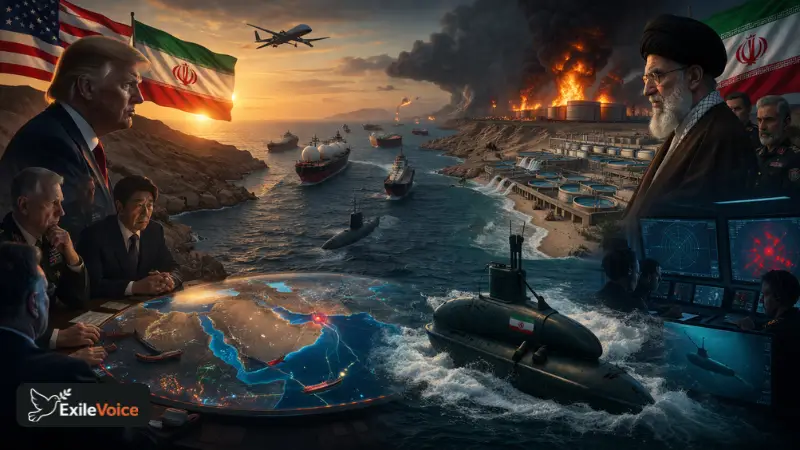
The geopolitical landscape of the Middle East is currently witnessing one of its most volatile periods in recent history. A critical 48-hour ultimatum issued by President Donald Trump regarding the Strait of Hormuz has sent shockwaves through international markets and diplomatic circles. This ultimatum demands the immediate reopening of the waterway, a vital artery for global energy supplies, or face catastrophic military retaliation against Iran’s domestic infrastructure. Specifically, the threat targets Iran’s entire electrical grid and energy system, an action that would effectively paralyze the nation’s functionality, from hospitals to telecommunications.
The Strait of Hormuz is a narrow passage through which approximately one-fifth of the world’s total oil consumption passes. Any prolonged closure or military engagement in this sector does not merely affect regional players; it triggers a domino effect on the global economy. For nations like Japan, which relies on this route for nearly 90% of its oil, the stakes are existential. This explains the delicate diplomatic dance performed by Japanese leadership, who find themselves caught between supporting a traditional Western ally and the pragmatic necessity of securing energy for their populace.
Iran’s response to this ultimatum has been equally severe. Tehran has countered with a "life for life" doctrine, suggesting that if their energy infrastructure is targeted, they will retaliate against the region's desalination plants. In an arid region where fresh water is a scarce and precious resource, the destruction of water infrastructure is a threat of immense proportions. This escalatory rhetoric moves the conflict beyond traditional military engagement into the realm of total infrastructure warfare, where the civilian population’s most basic needs, power and water, become the primary battlefield.
Technologically, the standoff highlights the evolution of asymmetric warfare. Iran has invested heavily in "Ghadir-class" midget submarines. These small, domestically produced vessels are specifically designed for the shallow, noisy waters of the Strait of Hormuz. Their small size makes them incredibly difficult for advanced U.S. sonar to detect, allowing them to lay mines or launch cruise missiles with a high degree of stealth. This "guerrilla warfare at sea" capability levels the playing field against a much larger, conventional naval force.
As the 48-hour window closes, the international community remains on high alert. The involvement of major powers like Russia and China adds another layer of complexity, as any unilateral action by the United States could lead to a broader breakdown of international norms. The coming days will determine whether diplomacy can provide a face-saving exit for all parties or if the region will descend into a conflict that could redefine the global energy market for decades.