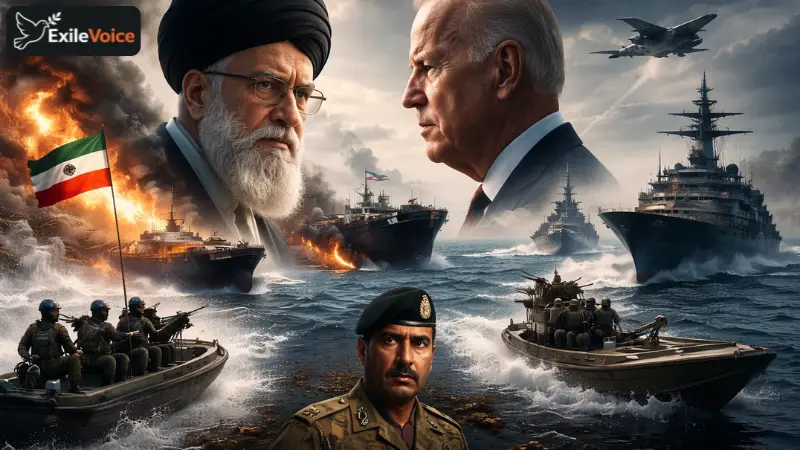
The geopolitical climate in the Middle East has entered a phase of high-intensity volatility, centered once again on the Strait of Hormuz, the world’s most important oil transit chokepoint. Recent reports indicate that the Iranian Navy has resumed the blockade of the Strait, signaling a breakdown in the fragile "conditional opening" that had briefly allowed maritime traffic to flow. This escalation comes amidst a backdrop of "re-thinking" in Tehran, triggered by what Iranian officials describe as erratic and provocative statements from the US leadership. The Iranian Deputy Foreign Minister has explicitly stated that the US "blockade" on Iranian assets and the lack of a ceasefire in Lebanon have made the resumption of negotiations in Islamabad unlikely for the immediate future.
The situation on the water is increasingly dangerous. International maritime channels have reported radio messages from the Iranian Revolutionary Guard Corps (IRGC) ordering tankers to turn back. In a significant escalation, Iranian fast boats reportedly fired upon two tankers, believed to be Indian-flagged, after they ignored warnings to halt their passage. This "kinetic signaling" by Iran is a direct response to US plans, reported by Al Jazeera, to potentially seize Iranian oil tankers in international waters using armed forces. Such a move by the US would represent a major shift from economic sanctions to direct military confrontation, effectively treating Iranian maritime commerce as "hostile" assets to be used as leverage in future settlements.
Simultaneously, the role of Pakistan as a mediator has come to the forefront. General Asim Munir’s recent visit to Tehran is being viewed as a conduit for new US proposals. According to sources close to the IRGC, the Pakistani military leadership presented a fresh set of "propositions" from Washington to the Iranian leadership. While Tehran has listened to these proposals, no formal response has been given, and the upcoming round of talks hangs in the balance. This positioning of Pakistan as a "messenger" highlights the regional stakes; any full-scale conflict between the US and Iran would have catastrophic economic and security implications for Islamabad, particularly concerning border stability and energy prices.
Adding to the complexity is a reported shift in Washington’s internal dynamics regarding its allies. Articles emerging from major US outlets suggest a growing fissure in the "blanket immunity" traditionally afforded to Israel. The extreme policies and "brutality" observed in recent regional conflicts have led to a decrease in Congressional support, particularly among younger Democratic lawmakers. This shift from "automatic renewal" of military aid to a "case-by-case" scrutiny marks a significant change in the US-Middle East policy. As Russia warns Iran of a massive US military buildup in the region, including fighter jets and naval resources, the threat of a "miscalculation" leading to war remains at an all-time high. The global community now watches the Strait of Hormuz, where a single spark could ignite a conflict that transcends regional borders.