The international diplomatic landscape is undergoing a profound transformation, marked most visibly by a significant recalibration in the United States' long-standing and historically unwavering support for Israel. For decades, American political discourse has been characterized by bipartisan consensus regarding Israel, where critique of its policies was often considered taboo. However, recent developments, heavily influenced by the ongoing conflict in the Middle East and evolving internal political pressures, suggest that this era of unquestioned alignment is being fundamentally challenged.
At the heart of this shift is a growing segment of the American political class, represented by figures such as Vice President J.D. Vance, who are vocalizing a more skeptical approach toward the traditional US-Israel framework. The transition is not merely rhetorical but reflects a broader strategic pivot. The administration’s tacit encouragement for a more critical engagement with Israeli leadership marks a departure from the historical norm, where any criticism was frequently dismissed as anti-Semitic or a violation of political orthodoxy.
This reassessment is largely driven by the humanitarian toll in Gaza and the wider region. As the conflict has unfolded, the disconnect between traditional geopolitical loyalty and evolving domestic public opinion, particularly among younger generations and academic institutions, has become stark. The argument now gaining traction in Washington is that an alliance with Israel does not necessitate an unconditional endorsement of every military action. This evolution is enabling US policymakers to engage more independently in regional mediation efforts.
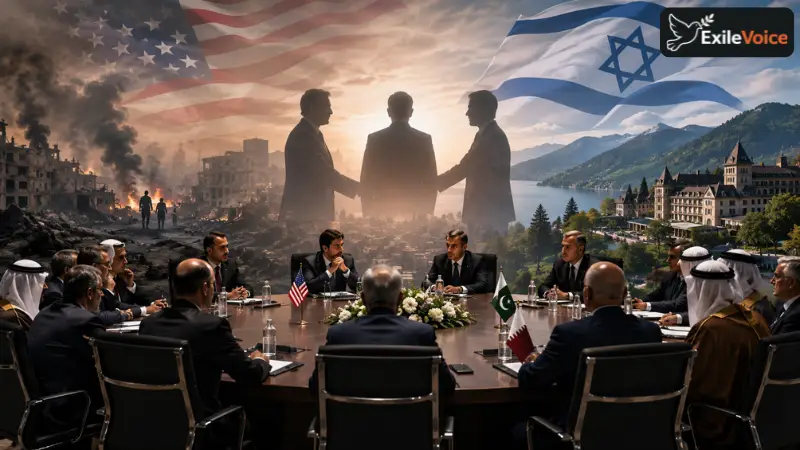
Furthermore, this diplomatic shift is creating new opportunities for regional actors. Pakistan, for instance, has found itself playing a crucial role in current diplomatic maneuvers, as seen in the ongoing peace talks hosted in Switzerland. The choice of neutral, secure locations like the Bürgenstock Resort, overseen by stakeholders such as Qatar, highlights the need for a controlled environment to navigate these complex negotiations away from public or protest-driven pressures. As the US moves toward a more pragmatic, "lighter touch" approach, the regional powers are repositioning themselves to navigate a world where the old alliances are becoming more transactional and less absolute.