

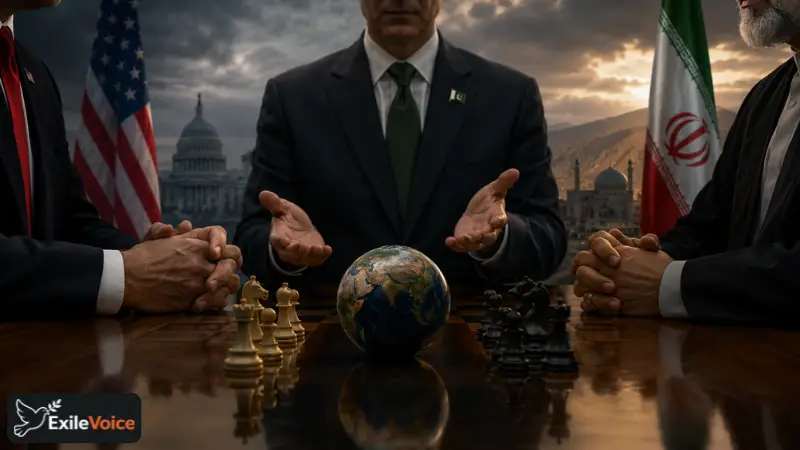
The architectural framework of Middle Eastern diplomacy has shifted on its axis. Historically, backchannel negotiations between the United States and the Islamic Republic of Iran have relied on standard neutral intermediaries, specifically the Sultanate of Oman or Swiss diplomatic emissaries. However, a highly sophisticated, high-stakes diplomatic backchannel has emerged, positioning Pakistan as the critical interlocutor navigating the volatile chasm between Washington and Tehran. Operating beneath the radar of global media scrutiny, Pakistani state emissaries and military negotiators have orchestrated multiple rounds of intense, closed-door discussions designed to engineer a durable diplomatic framework between the Trump administration and the Iranian political leadership.
This diplomatic engagement has been characterized by intense secrecy. Over a condensed timeframe, multiple high-level diplomatic delegations have traveled between Tehran and Islamabad. This cross-border shuttle diplomacy underscores the critical nature of the negotiations. According to senior geopolitical intelligence sources, the framework under discussion is far from a mere symbolic statement of intent. It represents a highly structured blueprint aiming to reconcile deeply entrenched adversarial positions.
Pakistan’s emergence as the primary pipeline for these delicate communications is rooted in its unique structural advantages. Unlike traditional regional power players, Islamabad maintains deep, historical institutional connections with the Iranian defense and intelligence apparatus, sharing a highly sensitive border. Concurrently, the Pakistani military establishment preserves deep, structural ties with Washington, providing it with unique access to the upper echelons of American national security decision-makers. This dual-access position enables Pakistani mediators to transmit sensitive diplomatic offers, redlines, and structural assurances with a level of fidelity and security that traditional diplomatic channels simply cannot replicate.
The complexity of this mediation effort is magnified by the distinct political realities and pressure indexes governing both Washington and Tehran. American political decision-making operates under intense domestic volatility, media saturation, and the looming pressures of legislative midterms. The Trump administration frequently utilizes a dual-track strategy: alternating between public, high-octane rhetoric and covert, transactional diplomacy. This approach is intended to project overwhelming strength to a domestic political audience while simultaneously keeping the door open for a monumental foreign policy achievement.
Conversely, the Iranian regime operates on a fundamentally different strategic clock. Secure from immediate electoral vulnerabilities and maintaining absolute control over its domestic information ecosystem, the political leadership in Tehran views diplomacy through a deeply historical, structural lens. Iranian negotiators are inherently resistant to public posturing, preferring airtight, legally binding commitments over rhetorical pronouncements. This asymmetry in political communication presents a profound challenge for Pakistani mediators, who must constantly translate Washington’s public, transactional maneuvers into terms that satisfy Iran’s demand for strategic respect and institutional permanence.
The core of the current diplomatic deadlock centers on a highly specific, multi-billion-dollar economic calculus. Iranian negotiators, acting on direct guidance from the highest echelons of the state, have established clear, quantifiable financial benchmarks as a non-negotiable prerequisite for any structural de-escalation. The Iranian roadmap demands an immediate, upfront injection of twelve billion dollars, followed by a structured release of an additional twenty-four billion dollars linked to specific milestones throughout the negotiation process.
To western critics, these demands are often framed as geopolitical extortion. However, within the historical context of Iranian diplomacy, this transactional model is standard practice. Tehran views these financial requirements not as a bonus, but as a necessary down payment to compensate for the economic damage caused by unilateral sanctions regimes. Historical precedents validate this perspective: the Obama administration successfully utilized a 1.8-billion-dollar financial settlement to secure the Joint Comprehensive Plan of Action (JCPOA), and the Biden administration subsequently authorized an eight-billion-dollar transfer tied to high-profile prisoner exchanges.
By quantifying their strategic demands into specific financial figures, Iranian negotiators have effectively shifted the conversation to a arena where the current American administration possesses deep familiarity: transactional, deal-driven negotiation. The central question confronting Washington is no longer ideological, but purely financial. In the grand calculus of American national security, a twenty-four-billion-dollar stabilization package is a relatively minor expenditure if it successfully averts a multi-trillion-dollar regional conflict and stabilizes global energy corridors. The success of this diplomatic gamble now depends on whether the mediators can reconcile Washington's desire for immediate, visible foreign policy victories with Tehran's requirement for concrete, upfront financial assurances.

