

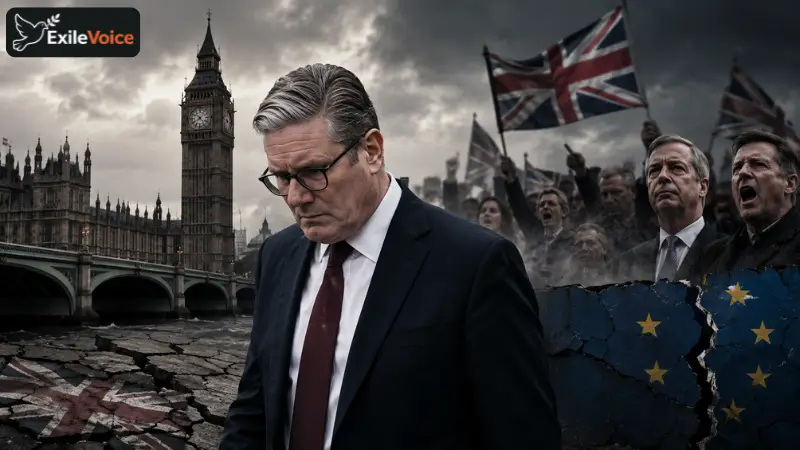
The political landscape in the United Kingdom has undergone a seismic shift with the resignation of Sir Keir Starmer as the leader of the Labour Party. This departure marks a significant moment in British political history, occurring just two years after a landslide victory that was intended to bring stability to a nation plagued by rapid leadership changes. Despite the high expectations surrounding his leadership, critics have consistently argued that his administration lacked a coherent, long-term strategic plan to address the multifaceted crises facing the country.
The decline of Starmer’s popularity was not sudden; it was the culmination of mounting internal pressure and external political challenges. Notable figures, including Shabana Mahmood and Andy Burnham, had reportedly signaled concerns regarding his waning approval ratings and policy direction. Furthermore, the Labour Party faced unprecedented pressure from the Reform Party, led by Nigel Farage, which capitalized on growing anti-immigration sentiments and nationalistic fervor among the electorate.
This political volatility is deeply rooted in the structural consequences of the 2016 Brexit referendum.The decision, championed by David Cameron, was driven by a segment of the population that many analysts suggest was disconnected from the geopolitical and economic realities of a globalized world. Consequently, the United Kingdom today finds itself increasingly isolated, struggling to forge a clear path forward between its historical transatlantic ties and its complex relationship with Europe. As Britain prepares for its seventh prime minister in seven years, the situation serves as a stark reminder of the fragility of contemporary political mandates when decoupled from sustainable governance and consensus-building.

