

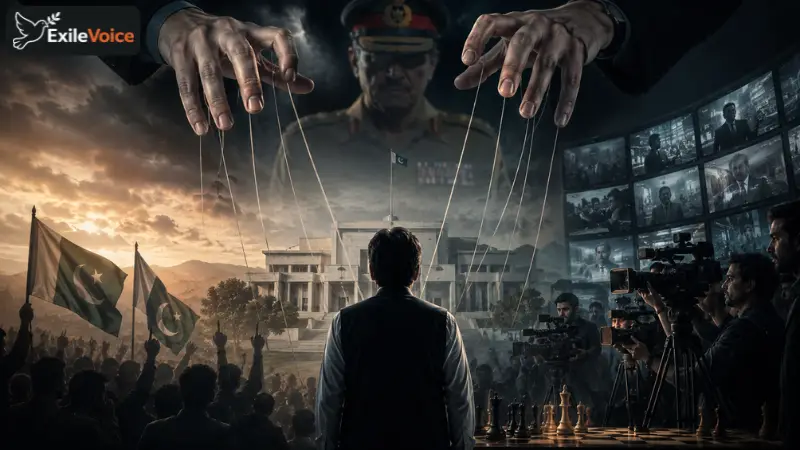
In the high-stakes world of Pakistani politics, the relationship between government officials, the military establishment, and the media creates a volatile environment. The recent admissions regarding how narratives were constructed against the administration of Imran Khan offer a profound look into the psychology of political loyalty and the personal struggles of those navigating this complex terrain.
One of the most striking aspects of these revelations is the internal realization among government spokespeople and officials about the nature of their work environment. For those dedicated to their roles, the constant, coordinated attacks from media entities, who were effectively acting as tools for the establishment, created a hostile and stifling atmosphere. This environment forced many to weigh their dedication to a cause against the immense pressure of daily character assassination and the relentless, often disingenuous, criticism of government policies.
The experience of serving in such an environment requires a level of resilience that is rarely acknowledged in the public sphere. For those in government, the choice often boiled down to becoming part of the "hypocritical" system , where one might publicly attack an opponent only to socialize with them in private, or maintaining one's principles at the cost of career stability. The decision of some to distance themselves from this system highlights a significant moral dilemma: can one remain an ethical actor within a structure that thrives on duplicity?
These insights also shed light on why certain leaders were tolerated for a period despite the establishment's reservations. It was not always about ideological alignment; often, it was a tactical necessity. When previous governments faced extreme unpopularity due to corruption allegations or poor performance, a new face was needed to stabilize the situation. The strategic deployment of figures like Imran Khan during times of political crisis serves as a case study in how the establishment uses popular political movements to maintain a veneer of stability while ensuring their own strategic interests are protected.
Moreover, the use of religious and moral framing to attack political opponents is a recurring theme that reflects a deeper societal issue. By questioning a politician's faith, personal relationships, or adherence to societal norms, the goal is to shift the debate from policy and governance to character and morality. This tactic is designed to alienate the base and sow doubt even among loyal supporters.
The resilience of the Pakistani public in the face of these narratives is a testament to the evolving political consciousness of the nation. As these hidden mechanisms of control are exposed, the public is becoming increasingly adept at distinguishing between genuine political discourse and manufactured disinformation. The path forward for Pakistan requires a commitment to genuine transparency, where accountability is based on performance rather than the ability to manage media narratives. Moving beyond these cycles of manipulation is essential for fostering a healthier, more democratic society where political discourse is centered on the needs of the citizens rather than the maneuvering of power-hungry factions.

