The Association of Physicians of Pakistani Descent of North America (APPNA) has long been regarded as a pillar of professional excellence and a testament to the intellectual prowess of the Pakistani diaspora. Founded in the late 1970s, the organization represents thousands of highly trained medical professionals who navigate rigorous educational systems in Pakistan before achieving further accreditation in North America. This intellectual elite is, or should be, a model of meritocracy and professional integrity. However, recent events at the APPNA annual meeting in Orlando, Florida, have sparked significant outrage, revealing the deep-seated political polarization that threatens to compromise the sanctity of such prestigious platforms.
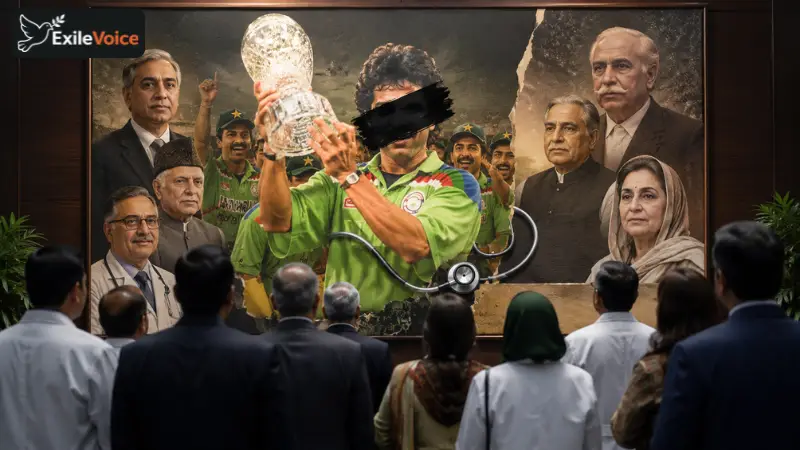
The incident in question involves the public display of an iconic 1992 World Cup victory photograph featuring Imran Khan. In a move described by many as highly disrespectful and indicative of a severe decline in institutional morality, Khan’s face was deliberately defaced on the display poster. While the poster showcased other prominent Pakistani figures, only Khan was targeted in this manner. This act has raised fundamental questions about the extent to which domestic political biases in Pakistan have infiltrated the minds of diaspora professionals.
For decades, APPNA has functioned not only as a professional networking hub but also as a cultural connector. It is where doctors gather for research, education, and community support. The infiltration of domestic political toxicity into this space is a microcosm of a broader societal issue. The struggle for relevance and power within Pakistan often forces individuals to align themselves with political factions to secure influence or protection. This behavior appears to be bleeding into the diaspora, where professional accomplishments are increasingly measured against political affiliations rather than clinical excellence or service to humanity.
Critics argue that the leadership within such organizations often seeks access to Pakistani power structures, government officials, bureaucrats, and military leadership, to bolster their standing or facilitate professional goals back home. This desire for access and the pursuit of political patronage at the cost of neutrality is a disservice to the members themselves and the reputation of the organization.
When a professional forum, designed for intellectual discourse and altruistic service, becomes a site for petty political vendettas, it undermines the very essence of its mission. The defacement of an image that represents a significant moment in Pakistani history, the 1992 cricket world championship, is not merely a political statement; it is an affront to national symbols and a betrayal of the neutrality that these professionals are expected to maintain.
Professional associations, particularly those comprising the 'cream of the crop' of the medical community, have a responsibility to foster environments that transcend political tribalism. By allowing their platforms to be used for political signaling, they risk alienating their diverse membership and damaging the credibility of their altruistic initiatives. True professional integrity requires the courage to stand above the fray, particularly in times of intense political volatility. It is a clarion call for the members of APPNA to reclaim their platform from the clutches of political polarization and reaffirm their commitment to the professional, educational, and philanthropic values that define their noble profession.