The recent escalation in the Middle East, particularly the conflict involving Israel and Hezbollah, has brought a long-standing military debate back to the forefront of global strategic analysis: is the age of the heavy tank over? Observations from the theater of war suggest that Israel’s legendary Merkava tanks, once considered virtually indestructible, are facing significant challenges from asymmetric threats. This shift is not merely a tactical change but a fundamental transformation in the nature of armored warfare.
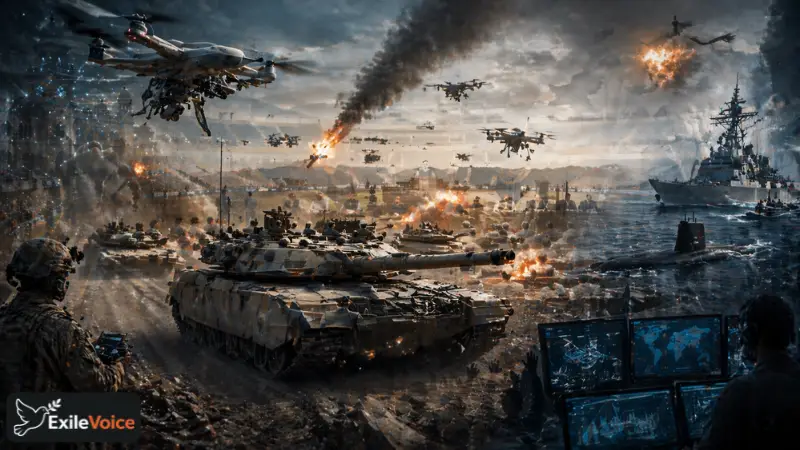
The Rise of Asymmetric Aerial Threats For decades, the tank was the king of the battlefield, representing the pinnacle of mobile firepower and protection. However, the proliferation of low-cost, high-precision drones has flipped the cost-benefit ratio of armored deployments. A drone costing a few thousand dollars can now disable or destroy a main battle tank worth millions. This "democratization of precision strike" allows non-state actors like Hezbollah to neutralize conventional military advantages without the need for an air force or advanced missile systems.
Technology vs. Tradition in the Pentagon This evolution has triggered internal friction within the world's most powerful military establishments. In the United States, the recent firing of Navy Secretary John Fallon highlights a deep-seated rift within the Pentagon regarding the future of naval and land-based technology. The debate centers on whether the U.S. should continue investing in "legacy systems" like multi-billion dollar aircraft carriers and heavy tanks, or pivot toward decentralized, AI-driven, and autonomous technologies.
The integration of Artificial Intelligence (AI) into the battlefield further complicates this transition. AI-driven swarms of drones and autonomous submarines represent a future where human-operated heavy machinery becomes a liability rather than an asset. The strategic consensus is fracturing, as seen in the clashes between leadership over which technologies will dominate the next century of conflict.
Strategic Implications for Global Powers As the conflict between the US and Iran demonstrates, "dangerous brinkmanship" now involves testing these new technological realities. Iran’s use of maritime spoofing and tactical strikes against tankers, despite U.S. Central Command's (CENTCOM) blockade, suggests that traditional force projection is no longer absolute. If conventional naval and armored power can be bypassed or neutralized by cheaper, smarter alternatives, global powers must urgently rethink their defense procurement and doctrine. The paradox of modern warfare is clear: the more expensive the weapon, the more vulnerable it appears to be against the ingenuity of low-cost innovation.