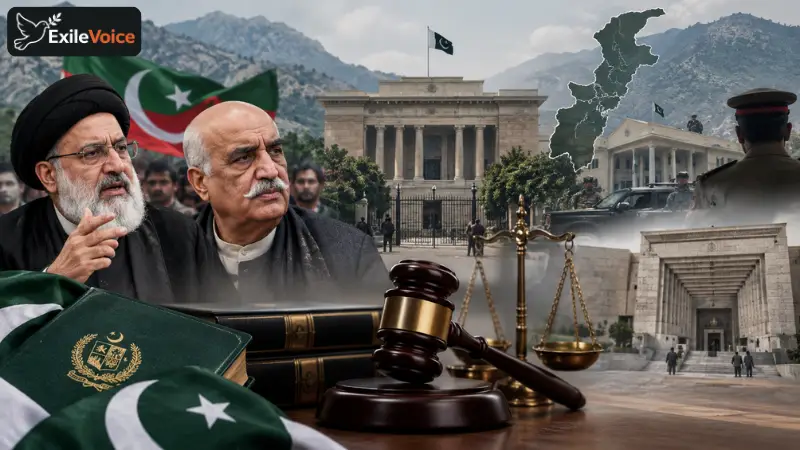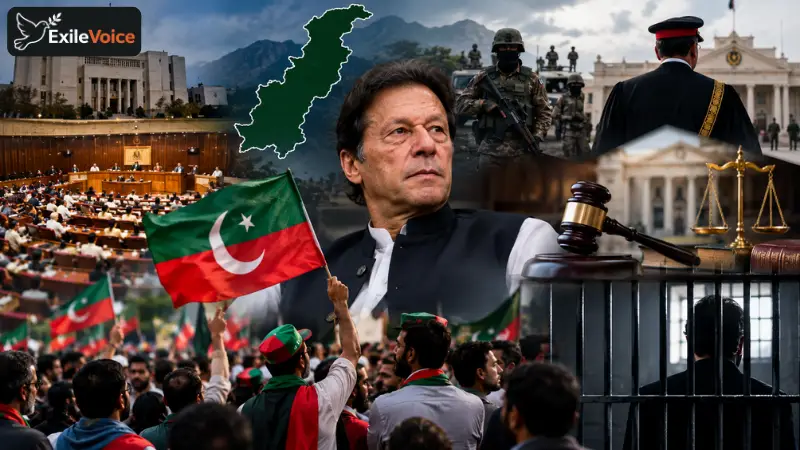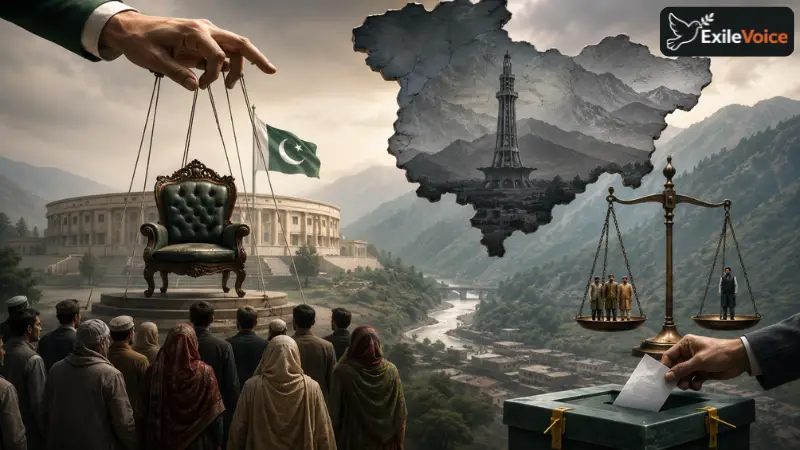
The political landscape of Azad Kashmir has long been a subject of intense debate, often obscured by narratives of sovereignty and independence. While frequently referred to as "Azad" (free) Kashmir, a deeper analysis reveals a complex structure of governance defined by heavy institutional dependency on Islamabad. This dependency is not merely incidental; it is structurally embedded in the constitutional framework that governs the region. At the heart of this discussion is the administrative relationship between the government in Muzaffarabad and the federal authorities in Pakistan. Although Azad Kashmir maintains its own legislative assembly, president, and prime minister, features that distinguish it from Pakistan's provinces, its legislative and executive powers are sharply constrained. This limitation is codified in provisions that require federal oversight for essential policy areas, including foreign affairs, defense, currency, and strategic infrastructure. The reality is that the "Azad" label functions more as an administrative distinction than a manifestation of absolute sovereign power.
The core of the issue lies in the interpretation of autonomy. While the region exercises authority over local governance and domestic administration, the strategic "command" remains centralized. The constitutional clauses that bind the Azad Kashmiri leadership to the "ideology of Pakistan" and the "accession of Kashmir to Pakistan" effectively turn the region's political framework into an extension of the federal state’s strategic priorities. This creates a state of perpetual tension, where local representatives must balance local demands with federal mandates.
Furthermore, the allocation of seats, specifically those reserved for Kashmiri refugees, has become a point of contention. Critics argue that these seats are not representative of the broader refugee population who have settled across Pakistan since 1947. Instead, they are often perceived as being utilized to integrate political favorites or those with aligned interests into the assembly, bypassing the local demographic reality. This practice fuels accusations of elitism and highlights a significant gap between the democratic aspirations of the Kashmiri people and the tactical requirements of the political establishment.
When looking at the history of these seats, the contrast with other refugee settlements in Pakistan, such as those in Karachi or Punjab, becomes stark. While millions migrated following the 1947 partition, the specific mechanism of reserved seats for "Kashmiri refugees" in the Azad Kashmir assembly appears to be a unique instrument of control. This system ensures that influence remains within specific networks that have historically aligned with Islamabad's geopolitical objectives, often at the expense of genuine grass-roots political representation.
Understanding the status of Azad Kashmir requires stripping away the rhetoric of total independence. The reality is one of controlled governance, where the administrative structure allows for the appearance of self-rule while maintaining functional dependency on Islamabad. This tension between the promised "azadi" and the reality of administrative control is the primary driver behind the burgeoning Kashmiri nationalism and the criticism directed toward the political status quo. As intellectual discourse within the region evolves, the demand for greater political agency and an end to federal control is becoming increasingly pronounced, signaling a potential shift in the regional political climate.