

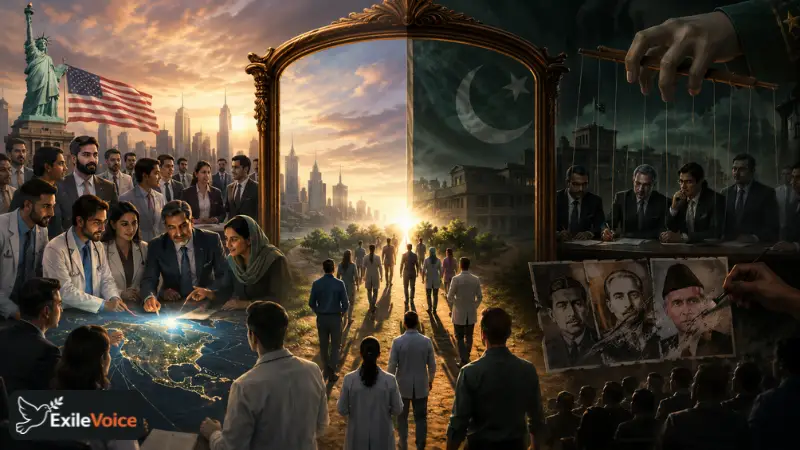
The annual convention of the Association of Physicians of Pakistani Descent of North America (APPNA), held this year in Orlando, Florida, has become a lens through which the fractured state of Pakistani politics is being viewed. Rather than a platform for professional development and community building, the organization is currently grappling with internal tensions that mirror the polarized and often authoritarian atmosphere prevailing within Pakistan itself.
Observers and members of the community have noted a growing concern regarding the influence of the Pakistani Embassy, and by extension, the military establishment, over the organization’s decision-making and programming. Reports suggest that the embassy, allegedly managed by military and intelligence officials rather than diplomatic staff, has exerted pressure to exclude dissenting voices and pro-democracy speakers from the convention’s proceedings. This has led to a sense of alienation among many successful professionals who feel that their organization is being co-opted to serve a specific political agenda rather than the interests of the medical community.
The controversy surrounding the defacement of a promotional poster featuring Imran Khan, alongside national icons like Allama Iqbal and Quaid-e-Azam, has further intensified the discord. While the official explanation cites an administrative error or an artist's independent design choice, many attendees interpret the incident as a symbolic act of political censorship, indicative of a deeper intolerance for opposition within the community's leadership.
This internal struggle has sparked a significant "soul-searching" movement among the membership. Successful physicians, many of whom have spent decades building prosperous lives in the U.S. through merit-based competition, are now questioning why their community lacks tangible political influence. Despite significant financial contributions to American political campaigns, they feel their advocacy efforts, focused on human rights and rule of law in Pakistan, have yielded minimal results. This realization is fueling a shift in perspective: a move away from reliance on the embassy as a central authority toward a more decentralized, grassroots strategy that engages directly with American civil society, think tanks, and human rights organizations. The goal is to develop a genuine political voice that serves the interests of the diaspora and, by extension, the people of Pakistan.

