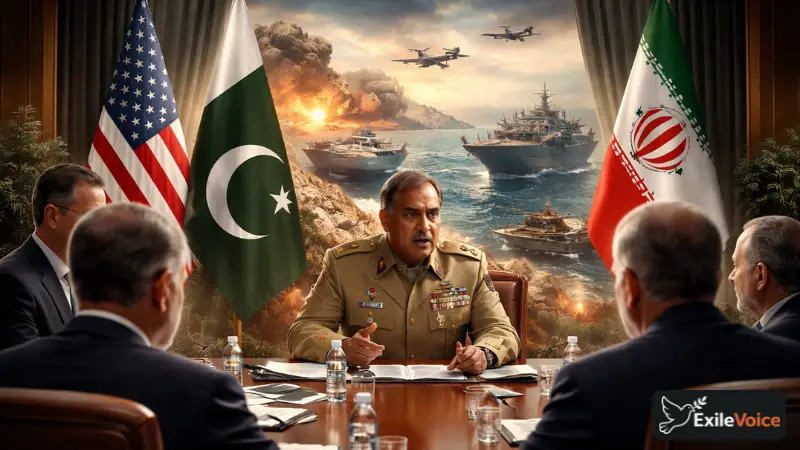
The geopolitical landscape of the Middle East has reached a critical juncture with the emergence of a leaked peace proposal, colloquially referred to as the Islamabad Accord. According to high-level reports from Reuters and other international news agencies, General Asim Munir of Pakistan has taken a proactive, direct role in mediating between Washington and Tehran. This diplomatic intervention comes at a time when the threat of a full-scale regional war looms larger than ever, specifically centered on the strategically vital Strait of Hormuz.
The proposed deal is structured into two distinct phases. The first phase demands an immediate cessation of hostilities among the United States, Israel, and Iran, coupled with the urgent reopening of the Strait of Hormuz. This maritime passage is the lifeline for approximately 20 percent of the world’s oil and liquefied natural gas. The second phase, scheduled to follow a 15-day negotiation window, envisions a more permanent solution. This involves the complete lifting of international sanctions against Iran in exchange for ironclad guarantees that the Islamic Republic will cease all efforts to develop nuclear weaponry and address its existing uranium stockpiles.
However, the path to peace is fraught with significant hurdles. Iran has reportedly rejected any form of "temporary" ceasefire. From Tehran’s perspective, the closure of the Strait of Hormuz is its primary leverage against Western military superiority. Iranian officials, including Foreign Minister Araghchi, have signaled that they will only consider a permanent settlement that includes substantial compensation for the economic and structural damages incurred during the conflict. The stakes are further heightened by the reported death of Major General Majid Khatami, a high-ranking intelligence chief within the Islamic Revolutionary Guard Corps, during a recent aerial strike.
The role of the United States remains equally complex. President Donald Trump has issued a stern ultimatum, setting a deadline for the reopening of the Strait. With a scheduled press conference from the Oval Office alongside top military brass, the international community is bracing for a potential escalation if diplomatic channels fail. Compounding the tension are unverified but alarming reports suggesting that North Korean long-range missiles may have successfully reached Iranian soil, a development that would fundamentally alter the military balance and extend the reach of the conflict to the American mainland.
This mediation effort by Pakistan represents a significant shift in regional dynamics. Notably, the negotiations appear to be spearheaded by the military leadership rather than the civilian government, as the names of Prime Minister Shehbaz Sharif and Finance Minister Ishaq Dar have been conspicuously absent from the primary deal-making narratives. As the world watches, the success or failure of this "Islamabad Accord" will likely determine the economic and security architecture of the region for decades to come.