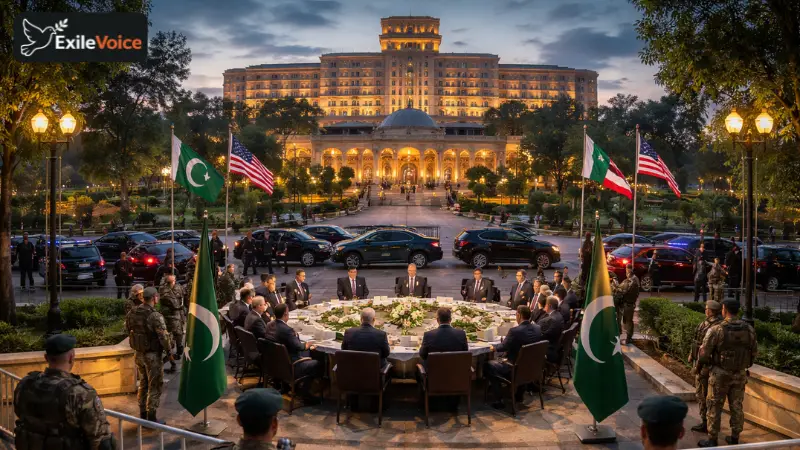
As the world watches with bated breath, Islamabad has transformed into a high-security citadel, preparing to host one of the most significant diplomatic negotiations of the decade. The Serena Hotel, now cleared of all regular guests, stands as the epicenter where the future of Middle Eastern stability may be decided. Within the next 48 hours, Pakistan will lead a high-stakes diplomatic effort to solidify a fragile ceasefire between the United States and Iran, a role that has thrust the nation back into the global spotlight.
The security arrangements are unprecedented. The Pakistani military has taken over the capital's security, establishing a "High Security Zone" to ensure the safety of incoming international dignitaries. Among the expected attendees are U.S. Vice President J.D. Vance, Steve Witkoff (President Trump's special envoy), and Jared Kushner. This high-level delegation underscores the importance the Trump administration places on these talks, despite the skepticism brewing in both Washington and Tehran.
The leadership behind this summit is a complex partnership between Pakistan’s civilian and military wings. Prime Minister Shehbaz Sharif and Chief of Army Staff General Asim Munir have been working in tandem over the last 72 hours to negotiate the terms of this engagement. Their goal is to transition a "fragile" pause in hostilities into a sustainable peace. However, the path is fraught with obstacles. Critics argue that while the ceasefire was announced with great fanfare, the reality on the ground, particularly in Lebanon, tells a different story.
Financial reports suggest that the Trump administration "leaned" heavily on Islamabad to bring Iran to the table. This pressure highlights Pakistan's unique position as a bridge between the West and the Islamic Republic of Iran. President Trump himself has previously noted that Pakistan understands Iran better than most. Yet, this mediation comes at a cost. Internally, Pakistan is deeply polarized, and the government faces immense pressure to prove that its role is that of a genuine peacemaker rather than a tool of foreign interests.
As the negotiations begin, the world looks to see if Pakistan can pull off a diplomatic "hat-trick" reminiscent of the 1971 opening of China. Whether this leads to a Nobel Peace Prize for the organizers or remains a footnote in a continuing conflict depends entirely on the outcomes reached within the walls of the Serena Hotel this weekend.