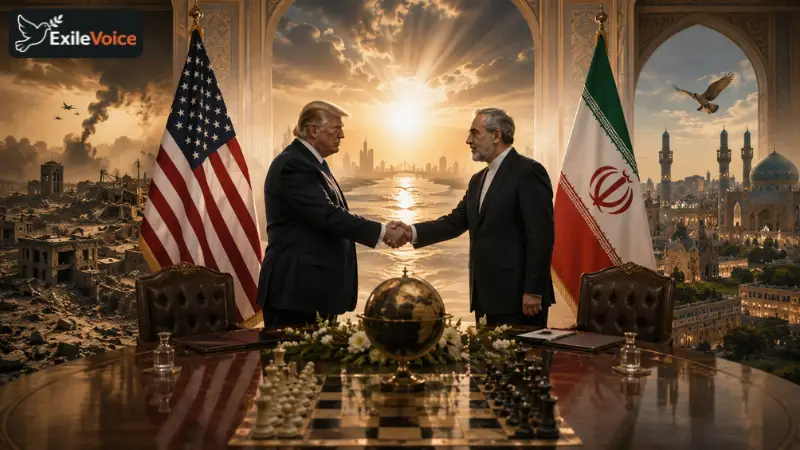
The recent unveiling of the "Islamabad Memorandum of Understanding" (MoU) between the United States and Iran marks a watershed moment in contemporary international relations. This development, which has caught the global strategic community off guard, represents a significant recalibration of power dynamics in the Middle East and beyond. By moving away from decades of brinkmanship, the two nations have signaled a pragmatic pivot that challenges the influence of traditional stakeholders, including the Zionist establishment and regional actors who have long benefited from a polarized US-Iran framework.
The core of this agreement, which outlines a structured path toward sanctions relief, the lifting of naval blockades, and a commitment to non-interference, effectively renders previous strategies of isolation obsolete. For Iran, the MoU is the culmination of a 23-year-long strategic paradigm, initiated in the wake of the 2003 Iraq invasion. Tehran’s intelligence-led strategy focused on building unconventional capabilities, including subterranean missile cities and advanced drone technology, while simultaneously leveraging regional infrastructures to ensure that any aggression against it would trigger a global economic and financial crisis.
The implications for international diplomacy are profound. By committing to the removal of sanctions and the termination of naval blockades within a 30-day timeframe, the US administration under Donald Trump has moved to normalize economic ties, facilitating potential investments upwards of $300 billion for Iran’s reconstruction. This investment framework, to be supported by regional allies and facilitated by US financial systems, suggests a future where Iran is integrated back into the global economy.
Crucially, the MoU addresses the "Greater Israel" and anti-Iranian narratives that have dominated Western policy circles. As the agreement takes root, the expected backlash from the Zionist lobby will be the primary hurdle for the Trump administration. However, the strategic pivot underscores a clear reality: Iran’s resilience has successfully forced a fundamental reassessment of American strategic interests, prioritizing long-term regional stability over the unsustainable pressures of regime-change agendas.