

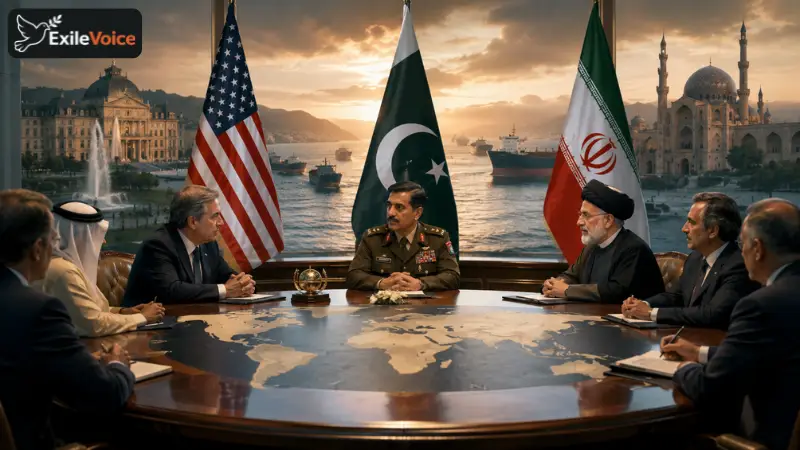
The geopolitical landscape in the Middle East may be on the verge of a significant shift, as sources from Washington, Tehran, and Islamabad converge on reports of a "bridge deal" aimed at stabilizing the region. Often referred to as the "Islamabad Accord", despite the formal ceremony being hosted in Geneva, this developing framework represents a rare moment of diplomatic convergence.
The agreement is designed as a 60-day mechanism to create a window for deeper, long-term negotiations. At its core, the accord addresses three primary pillars: normalizing shipping through the Strait of Hormuz, easing the economic blockade on Iran, and initiating a process for sanctions relief.
The opening of the Strait of Hormuz without the burden of excessive fines, tolls, or security checkpoints could have an immediate, positive impact on global oil markets. By normalizing shipping, the deal seeks to alleviate inflationary pressures linked to energy prices. In exchange, the United States is reportedly prepared to offer sanctions relief. Historically, sanctions have acted as a restrictive mechanism, impacting various sectors of the Iranian economy, including banking, trade, and energy exports. The proposed relief would mark a significant departure from decades of US policy, signaling a possible de-escalation of the "economic warfare" that has defined the relationship since the 1980s.
Reports suggest that Pakistan and Qatar have jointly mediated the process. Notably, the diplomatic community has highlighted the role of Pakistan’s General Asim Munir in navigating these complex talks. The choice to host the signing ceremony in Geneva, Switzerland, rather than Islamabad, stems from specific security and logistical considerations, yet the influence of the "Islamabad" channel remains central to the narrative.
While the momentum behind the deal is substantial, significant hurdles remain. The Iranian side, represented through various media outlets, has expressed a mix of optimism and caution, particularly regarding the potential for $300 billion in reconstruction support and the specifics of the sanctions relief. Furthermore, the "nuclear question", the fundamental issue of Iran's nuclear program, remains a sticking point slated for "Phase Two" of the negotiations.
Internal political dynamics in the US, Israel, and Iran continue to cast a shadow of uncertainty over the proceedings. Prime Minister Benjamin Netanyahu’s reported shock at the development, combined with Iran’s insistence on "hard-ball" negotiation tactics, suggests that the path to a final, lasting agreement will require immense diplomatic dexterity. For now, the world watches as this 60-day bridge attempts to turn the tide of decades-long hostility.

