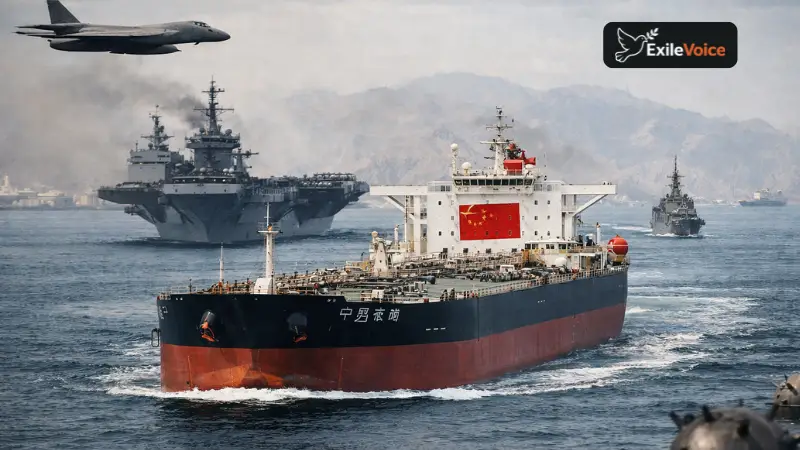
As the conflict in the Middle East intensifies, the Strait of Hormuz has become the epicenter of a global energy crisis. However, a closer look reveals a startling anomaly: while Western-aligned shipping is paralyzed, Iranian oil exports to China are not only continuing but reportedly increasing. This "invisible corridor" highlights a significant geopolitical shift where traditional American naval dominance is being challenged by complex alliances.
Leading analysts, including Ian Bremmer, have noted that despite the presence of U.S. carrier strike groups and the deployment of B-1 Lancer supersonic bombers, the maritime blockade is far from absolute. Iran has strategically kept the Strait open for Chinese vessels. The reason for American restraint in this sector is clear: interrupting oil shipments destined for Beijing would risk a direct confrontation with the world’s second-largest economy. Consequently, the U.S. finds itself in a strategic bind, unable to fully choke off Iranian revenue without triggering a much larger global conflagration involving China.
Furthermore, intelligence suggests that Russia and China are providing critical early warning support to Tehran. Recent reports indicate that an intended strike by a U.S. B-1 bomber was thwarted because Iranian forces were warned of the aircraft's take-off and trajectory in real-time. This level of coordination suggests that the "War About the War", the diplomatic and intelligence battle occurring behind the scenes, is just as critical as the kinetic operations on the ground. For Iran, the strategy is one of "selective blockade," punishing those who support the U.S.-Israeli offensive while rewarding its strategic partners with uninterrupted energy flow.