

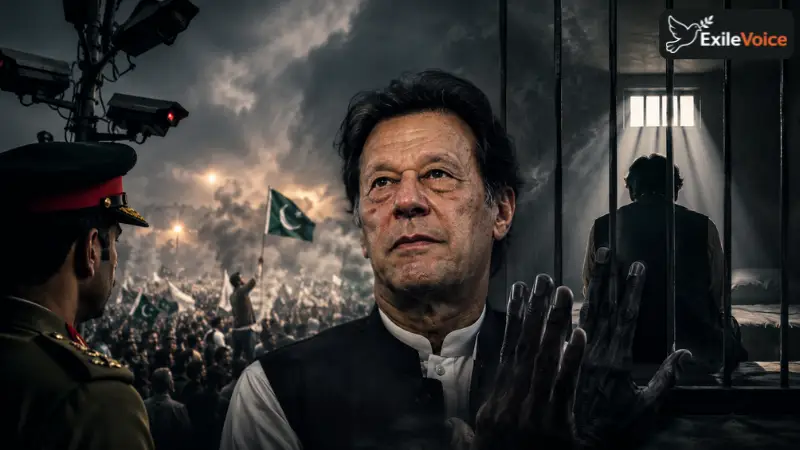
The current political landscape in Pakistan is characterized by deep anxiety and speculation regarding the health and well-being of former Prime Minister Imran Khan. The lack of verified information, or what is colloquially termed "proof of life", has fueled intense rumors across social media platforms, suggesting that the leader may no longer be among his supporters or is suffering from severe health deterioration. This climate of uncertainty highlights a profound disconnect between the state and the populace, exacerbated by the restricted access to Khan by his family, legal counsel, and personal doctors.
The situation mirrors historical instances of regime change and the subsequent marginalization of political figures. Analysts often compare the current circumstances to the fate of Mohamed Morsi in Egypt, where a democratically elected leader was ousted, imprisoned, and eventually passed away while in state custody. This comparison strikes a chord with many in Pakistan, as it underscores fears regarding the treatment of political prisoners and the state’s ultimate responsibility for their health and safety. The state’s persistent refusal to allow independent medical access to Khan has led to a desperate plea from the Pakistan Tehreek-e-Insaf (PTI) leadership. They have publicly requested, and in some cases signaled, that they would forgo political agendas if granted the opportunity to ensure his medical care and familial contact.
This crisis is not merely about one individual; it is an indicator of the broader health of Pakistan’s democratic institutions. The atmosphere of suspicion is heightened by the state’s digital surveillance measures, which have created a "surveillance state" capable of monitoring communication across all mediums. For the youth of Pakistan, a demographic that is large, unemployed, and increasingly disillusioned, this level of uncertainty acts as a catalyst for potential social unrest. The fear among military and political circles appears to be that any clear information about Khan’s state might trigger reactions they are currently ill-equipped to manage. The recurring cycle of political instability, where leaders are removed and later vindicated or scrutinized by the judiciary decades too late, continues to erode public trust.
The persistence of these rumors is compounded by the lack of transparency in how the state manages its prisoners. When a high-profile political figure is kept in total isolation, the burden of truth rests entirely upon the authorities. Until there is a verifiable, transparent, and independent assessment of Khan's condition, the political temperature will continue to rise, keeping the country on a knife-edge of potential mobilization and confrontation.

