

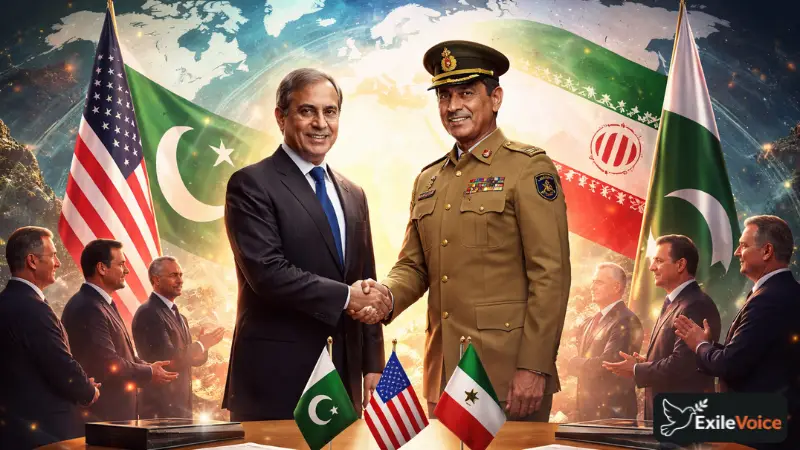
The geopolitical landscape of South Asia is undergoing a tectonic shift as Pakistan moves from the periphery to the epicenter of global diplomacy. In a remarkable turn of events, Islamabad has successfully mediated a ceasefire between the United States and Iran, a feat that has left veteran observers and regional rivals alike in a state of shock. This diplomatic breakthrough is not just a temporary pause in hostilities; it represents Pakistan’s forceful re-entry onto the world stage as a "net stability provider," a role previously dominated by its larger neighbor, India.
The significance of this mediation is underscored by the coverage it has garnered in top-tier global publications like The Wall Street Journal and Bloomberg. Sadanand Dhume, a prominent South Asia analyst, notes that Pakistan is "back from the cold," moving from a state of diplomatic isolation to having a front-row seat at the most critical negotiations of the decade. This is not the back-channel outreach of the 1970s that facilitated US-China relations; this is a complex, multi-lateral maneuver involving China, Turkey, Saudi Arabia, and the United Arab Emirates. The "15-point proposal" floated by Islamabad has been acknowledged by both Tehran and Washington, signaling a level of institutional depth that many critics believed Pakistan had lost.
However, this international victory is mirrored by a fierce internal struggle. The "Season 2" of the political saga in Pakistan, Imran Khan versus the military establishment, seems to be reaching a decisive conclusion. Analysts argue that while Khan remains a charismatic and popular figure, the military, under General Asim Munir, has effectively consolidated power. By securing a major international win and stabilizing global markets, the establishment has neutralized much of the international pressure that Khan’s supporters hoped would champion his cause. The institutional "lock" on the country, combined with recent constitutional amendments and a reshuffled military hierarchy, suggests that the "house" has won once again.
The reaction from India has been particularly telling. Prominent Indian media outlets and journalists have displayed what some call "cognitive dissonance," struggling to reconcile their portrayal of Pakistan as a "basket case" with its current role as a global peacemaker. The zero-sum mindset that dominates South Asian media has led to a meltdown in some circles, with critics claiming Pakistan is merely following a "Washington draft." Yet, the reality of a Tehran-Washington truce mediated by Islamabad remains a stubborn fact that the international community is forced to recognize. For Pakistan, the challenge now is to translate this diplomatic capital into domestic economic stability and a more inclusive political order.

