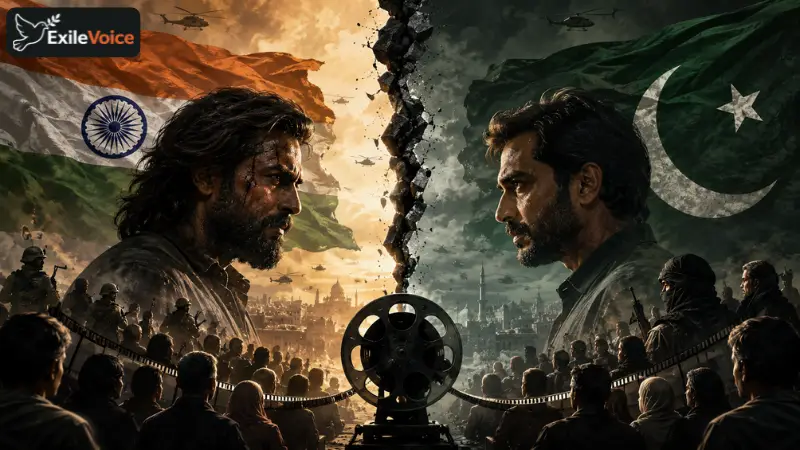
The role of cinema in reflecting and shaping national sentiment cannot be understated. Recently, the Indian film 'Dhurandhar' (Part 2) has emerged as a significant cultural artifact, illustrating the deep-seated emotional and psychological needs of the Indian public regarding national security and its complex, often strained, relationship with Pakistan. At its core, the film functions as a form of national catharsis, allowing audiences to process long-standing anxieties related to cross-border tensions, terrorism, and the perceived influence of foreign intelligence agencies.
From a sociological perspective, 'Dhurandhar' provides a tangible character, Major Iqbal, who serves as an avatar for the grievances felt by many Indian citizens. For decades, the public narrative in India has frequently linked domestic security challenges to external interference. By creating a cinematic antagonist who embodies these threats, the film provides a platform for resolution, even if only in the fictional realm. This phenomenon is not merely about entertainment; it is an emotional release valve for a population that feels limited in its capacity to address deep-rooted geopolitical issues through conventional diplomatic or state-level channels.
However, the implications of such narratives are profound. While the film satisfies a demand for nationalistic storytelling, the creation of such intense emotional portrayals risks hardening public opinion on both sides of the border. When narratives of conflict are consumed on such a massive scale, they can mirror the frustrations found within the Pakistani diaspora and the general populace regarding their own national security challenges. There is a growing sentiment in Pakistan that reflects a similar desire for direct action against perceived threats, a trend that warrants careful examination by policymakers and sociologists alike.
The analytical value of 'Dhurandhar' lies in its ability to highlight how popular media can serve as a mirror for national anxieties. Whether or not the film is perceived as an accurate representation of historical or political events, its impact on the collective consciousness is undeniable. The challenge for modern society is to balance the role of cinema as a creative medium with the responsibility to avoid fueling the flames of animosity. As we move forward, it is essential to foster spaces for dialogue that transcend the binary of 'hero vs. villain' and address the systemic complexities that drive cross-border mistrust.