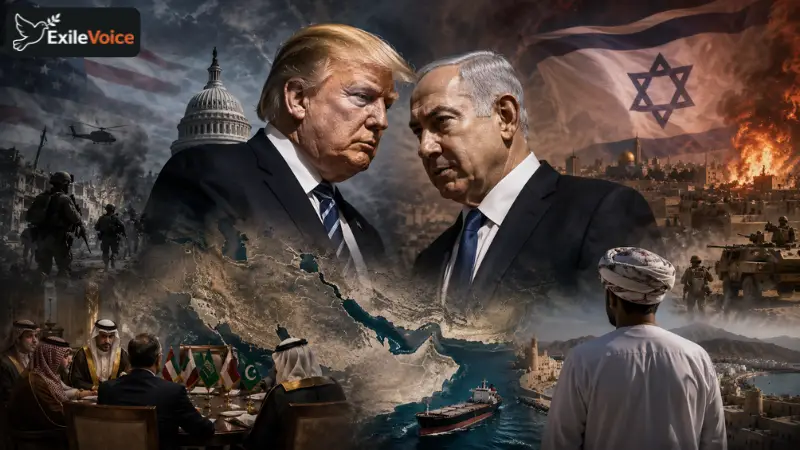
In the complex web of Middle Eastern geopolitics, few events have recently captured the attention of international observers as intensely as the perceived rift between Donald Trump and Benjamin Netanyahu regarding operations in Beirut. Initially presented as a dramatic fracture in the US-Israel alliance, subsequent reporting suggests a more calculated and cynical dynamic. The narrative of a strategic disagreement, replete with high-stakes rhetoric, appears to have been less about fundamental ideological differences and more about managing public perception and domestic narratives.
According to reports circulating in Israeli media, the initial signals suggesting a green light for an aggressive maneuver in Beirut, aimed at displacing local populations to clear strategically vital areas, were, in large part, an orchestrated bluff. This maneuver was designed to incite widespread panic, thereby facilitating the evacuation of target neighborhoods without necessarily committing to a full-scale occupation at that precise moment. However, the situation escalated beyond this initial design when the scale of the Israeli deployment exceeded the tacit, limited scope anticipated by the American administration.
This friction, while seemingly chaotic, highlights a recurring pattern in the US-Israel strategic partnership: a delicate dance of coordination punctuated by episodes of theatrical public discord. This dynamic frequently undermines broader diplomatic efforts, including mediated discussions involving regional players like Saudi Arabia, Qatar, the UAE, and Pakistan, which seek to de-escalate tensions in the region.
Furthermore, the recent strategic posturing involving Oman adds another layer of complexity. Oman, traditionally a neutral mediator in regional conflicts, has found itself under intense scrutiny from Washington. Its role in facilitating communication between Iran and the United States has long been appreciated, yet recent diplomatic signals, including reactions to the potential imposition of tolls on the Strait of Hormuz, have caused irritation in Western corridors. The diplomatic fallout from these tensions serves as a stark reminder of the volatile state of regional stability, where individual national interests often clash with the broader strategic objectives of global powers.