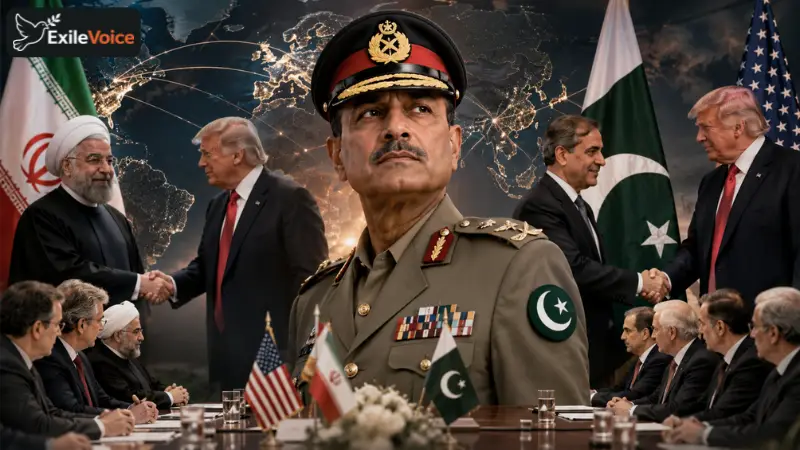
In a shifting landscape of South Asian geopolitics, Pakistan has unexpectedly emerged as a central player in mediating high-stakes international conflicts. At the heart of this transformation is Pakistan’s Chief of Army Staff, General Asim Munir, whose diplomatic maneuvering and rapport with global leaders, most notably President Donald Trump, have placed the country in the center of unprecedented diplomatic breakthroughs.
Traditionally, Pakistan’s role in Middle Eastern politics has been peripheral, often eclipsed by other Gulf nations. However, in recent months, Islamabad has served as a critical conduit between the United States and Iran, facilitating direct, face-to-face negotiations that had not occurred since 1979. This unique positioning has been largely attributed to General Munir’s unconventional diplomatic approach. Unlike his predecessors, who often navigated through established military channels, Munir has carved out a profile as a global peacemaker, engaging directly with leaders across the geopolitical spectrum, from Tehran to Washington.
Observers point to several factors contributing to this shift. The urgency of cooling tensions between the US and Iran, coupled with Pakistan’s strategic importance and its own complex border dynamics, provided an opportunity for the country to leverage its influence. The symbolic and practical significance of this role was underscored by the signing of a landmark memorandum of understanding between the US, Iran, and Pakistan, an event that has been heralded by many as a historic achievement for the region.
Domestically, this shift has brought a sense of pride and renewed international relevance to Pakistan. Social media and public discourse within the country reflect an elation over Pakistan’s newfound status as a diplomatic hub, moving away from past perceptions of the nation as merely a conflict-prone state. However, this "bromance" between international powers and military leadership is not without its critics. Concerns remain regarding the long-term sustainability of these diplomatic ties and the internal impact on Pakistan's own democratic processes, human rights, and freedom of speech. As history has often demonstrated, alignments with major global powers can be transient, and the reliance on a single institutional figurehead raises questions about the future trajectory of Pakistan’s political and institutional stability once current leadership shifts.