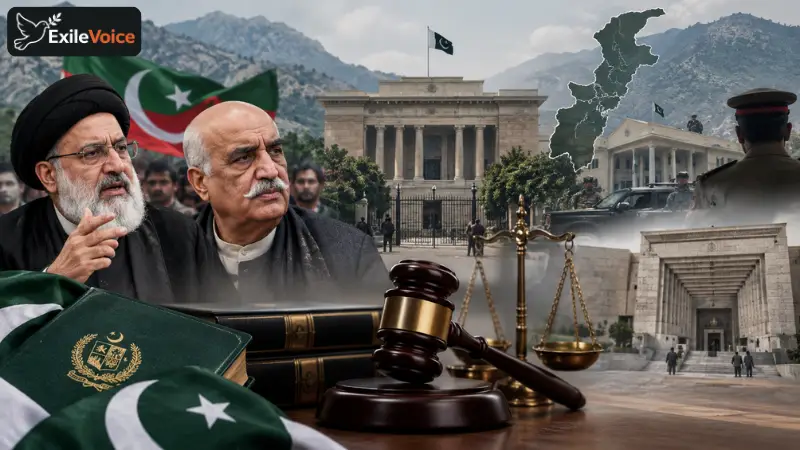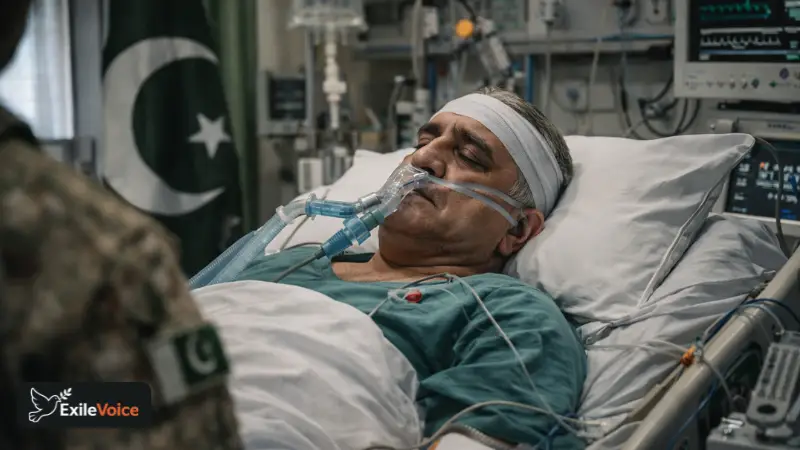
Pakistan’s political landscape is currently reeling from news regarding the health of former Army Chief, General Qamar Javed Bajwa. Once considered the most powerful man in the country—a figure who orchestrated the rise and fall of governments and directed the nation’s strategic destiny for over six years—Bajwa is now reportedly in a critical condition at the Combined Military Hospital (CMH). Insights from prominent journalists suggest that following a fall, the former general suffered a severe brain hemorrhage, specifically a right-sided stroke that has led to a condition known as prosopagnosia (visual agnosia). This neurological impairment has reportedly left him unable to recognize even his closest family members.
The medical crisis of General Bajwa serves as a somber reflection on the transient nature of power. During his tenure, his decisions led to significant political upheavals, most notably the 2022 change in government that many believe triggered a cascade of legal and social crises. Critics point to the mass exodus of professionals, including thousands of physicians, and the numerous asylum applications filed by Pakistanis abroad as a direct consequence of the political instability fostered during his era. Furthermore, lingering questions remain unanswered regarding high-profile incidents such as the assassination of journalist Arshad Sharif and the assassination attempt on former Prime Minister Imran Khan on November 2, 2022.
As General Bajwa faces a long and difficult recovery, the discourse in Pakistan has shifted toward a "concept of retribution" or Makafat-e-Amal. While the current military leadership under General Asim Munir continues to navigate the complex internal and external challenges facing the country, the legacy of the "Bajwa era" remains a subject of intense scrutiny. The transition from absolute authority to a state of extreme medical dependency serves as a historical footnote on the limits of human ambition and the unpredictable shifts in fortune that define Pakistan’s power dynamics.