

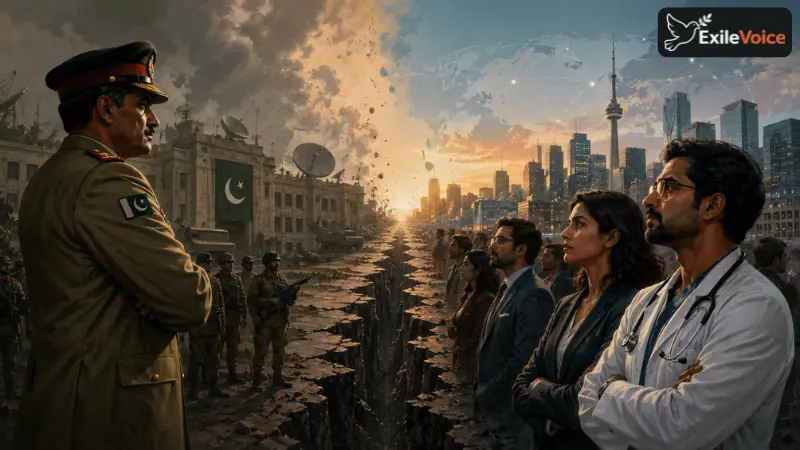
The relationship between the Pakistani military and the global Pakistani diaspora has undergone a profound transformation over the past two years, marked by a significant decline in trust and affection. Historically, many expatriates viewed the military as an essential national defense force that, despite its faults, acted in the broader interest of the state. However, recent developments, particularly since 2022, have shattered this perception, leading to a widespread belief that the institution has shifted its priorities away from the protection of the Pakistani people.
This shift in sentiment is particularly visible among highly successful, educated members of the diaspora, including the many physicians who have achieved excellence in their fields across North America. For these professionals, the military is no longer viewed as a bastion of national sovereignty but as an instrument of foreign geopolitical interests. This change in perspective is not merely reactive; it is rooted in the observation of Pakistan's domestic situation,the narrowing of political space, reports of crackdowns on opposition, and the perceived suppression of dissent.
The consensus among many diaspora members is that the military establishment has failed to maintain a connection with the genuine aspirations of the public. They point to the relative stability that existed during previous political tenures compared to the current volatility as evidence of a failed governance model. The perception that the institution is more concerned with managing its public image through social media and suppressing critics, often through paid or coerced narratives, rather than engaging with the concerns of its most successful citizens is a point of deep contention.
This disillusionment is creating a critical moment for the military leadership. There is a growing demand from within the diaspora for the institution to reflect on its role and the necessity of rebuilding trust with the public. For a community that prides itself on merit, professional success, and independence, the current state of affairs in Pakistan is not just a source of pain but a prompt for intense critical analysis. The diaspora is increasingly viewing the Pakistani establishment through a lens of skepticism, demanding accountability and a return to the rule of law. As the influence of these expatriates grows, their shifting views could carry significant weight in future discussions about Pakistan's national direction and the future role of its military.

