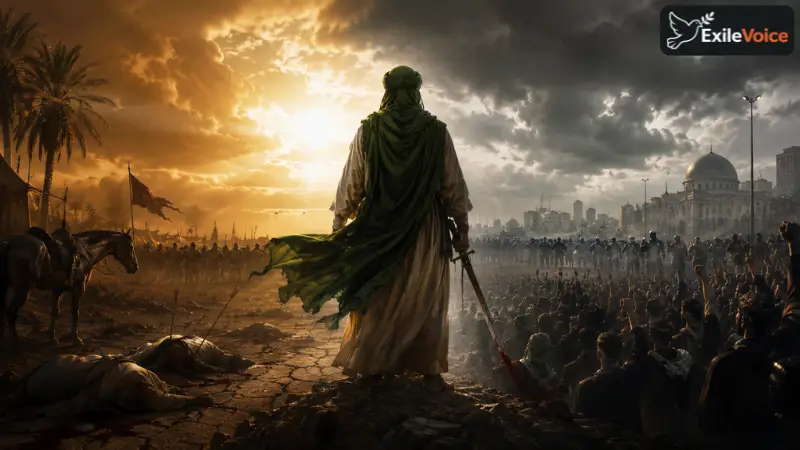
The history of mankind is punctuated by pivotal moments where individual actions irrevocably alter the trajectory of moral standards. Among these, the martyrdom of Imam Hussain ibn Ali stands as a monumental event, not merely because of the immense tragedy that befell the grandson of the Prophet Muhammad, but because of the fundamental principles he defended with his life and the lives of his family.
To truly understand this event, one must look past the annual rituals and emotional expressions that characterize the remembrance of 10th Muharram today. While the grief over the events in Karbala is profound, the deeper, often overlooked dimension is the political and ethical struggle that led to this crisis. Imam Hussain did not embark on his journey to incite violence or simply to contest power for personal gain. His stand was against the institutionalization of hereditary rule, which violated the foundational Islamic principles of governance, principles that emphasized merit and consensus over dynastic succession.
Historical records indicate that the transition of power from the rightly guided Caliphs to the Umayyad dynasty, specifically the nomination of Yazid by his father, Muawiyah, marked a sharp departure from the established practices of the early Islamic period. Imam Hussain’s resistance was a principled rejection of an authority structure he deemed illegitimate and unconstitutional. He chose to draw a "red line" with the blood of his kin, a line meant to signal to all future generations that a believer must not bow before a tyrant, regardless of the strength of the latter’s army or the reach of their administrative power.
The tragedy of the situation is that while the Muslim world continues to commemorate the event through various religious rituals, such as sabeels, majalis, and mourning processions, the core message of resistance against injustice and illegitimate rule is often neglected. In many instances, the very people who claim the deepest devotion to the legacy of the Prophet’s family act in ways that mirror the practices of those who opposed them.
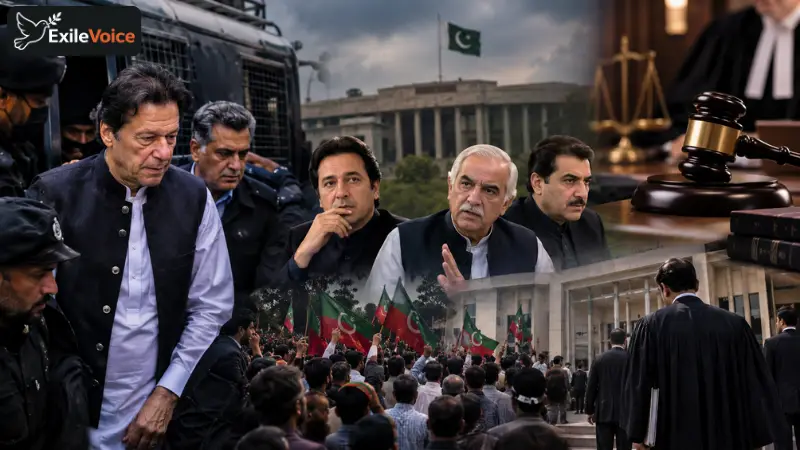
The struggle of Imam Hussain was essentially a struggle against the silencing of dissent and the abuse of state power. When we observe modern instances where authorities demand blind obedience, suppress public opinion, and enforce compliance through the coercion of influential local figures, we see a recurring pattern of historical behavior. By analyzing these events, we are forced to confront an uncomfortable reality: the principles for which Imam Hussain stood are frequently abandoned by those who profess to honor him.
Ultimately, the sacrifice in Karbala serves as an eternal reminder that the pursuit of truth and justice often demands immense personal sacrifice. The "red line" drawn by Imam Hussain was not just for his time, but for all who seek to stand against corruption, authoritarianism, and the perversion of justice. To honor this legacy requires more than emotional catharsis; it requires a commitment to the principles of moral integrity, political transparency, and the courage to stand against injustice, even when the odds are overwhelmingly against the individual. True devotion lies in the embodiment of these virtues, rather than mere performance of rituals.