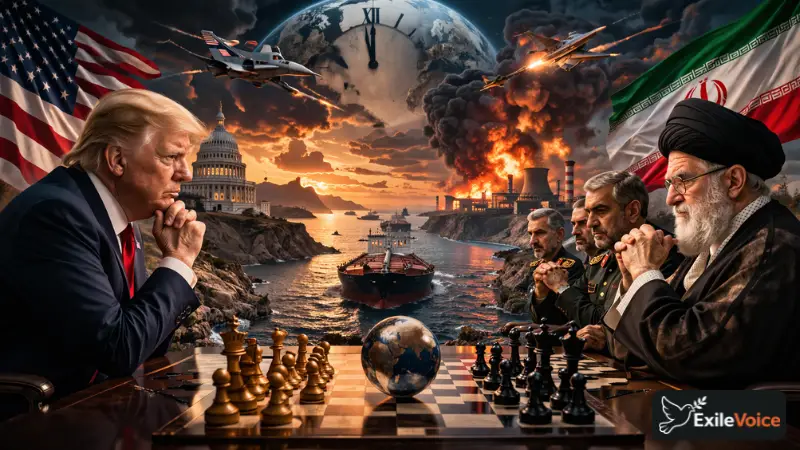
In a move that has sent shockwaves through international diplomatic and military circles, U.S. President Donald Trump has issued a high-stakes 24-hour postponement of what many are describing as a potentially cataclysmic military strike against Iran. Originally scheduled for Monday night, the "deadline for destruction" has been moved to Tuesday at 8:00 PM, a decision the President framed as an "act of kindness." However, the rhetoric accompanying this delay has been anything but gentle. Utilizing his Truth Social platform, the President employed unprecedentedly harsh language, demanding the immediate reopening of the Strait of Hormuz while threatening to target Iran’s power plants, bridges, and critical infrastructure in a singular, devastating blow.
The global reaction to this ultimatum has been polarized. Within the United States, a significant debate has emerged regarding the President's state of mind and the implications of his combative tone. Critics argue that the use of derogatory language and mocking religious sentiments, specifically the taunting use of phrases like "Praise be to Allah" and "Glory be to God", not only alienates the Iranian leadership but risks offending the broader Muslim world, including key U.S. allies in the Gulf Cooperation Council (GCC). Legal experts and political analysts have expressed profound concern over the nature of the threatened targets. Organizations like the New York Times have highlighted that strikes on civilian infrastructure, such as water desalination plants, power stations, and bridges, could be classified as war crimes under international legal frameworks including the Geneva Convention and the Nuremberg Principles.
A particularly striking aspect of this crisis is the apparent disregard for the very international legal architecture that the United States helped build over the last eight decades. Prominent scholars like Professor John Mearsheimer have noted the irony: the rules designed to maintain global order are being dismantled by their primary architect. In interviews, President Trump has reportedly expressed a lack of belief in traditional international law, suggesting that his own sense of morality and ethics serves as the only true boundary to American power. This shift represents a fundamental departure from the "rules-based order" and introduces a level of unpredictability that has left the international community on edge.
As the Tuesday deadline approaches, the role of mediators has become paramount. Reports suggest that countries like Pakistan, Egypt, and Turkey are working frantically behind the scenes to facilitate a temporary 45-day ceasefire. The objective of such a pause would be to allow for comprehensive negotiations to reach a final settlement between Washington and Tehran. However, the path to peace is fraught with obstacles. Iran remains hesitant to agree to a temporary truce without a guaranteed final deal, fearing that reopening the Strait of Hormuz, their primary source of strategic leverage, without a permanent resolution would leave them vulnerable to future aggression. With only hours remaining, the world watches to see if diplomacy can prevail over the "all-out hell" promised by the U.S. administration.