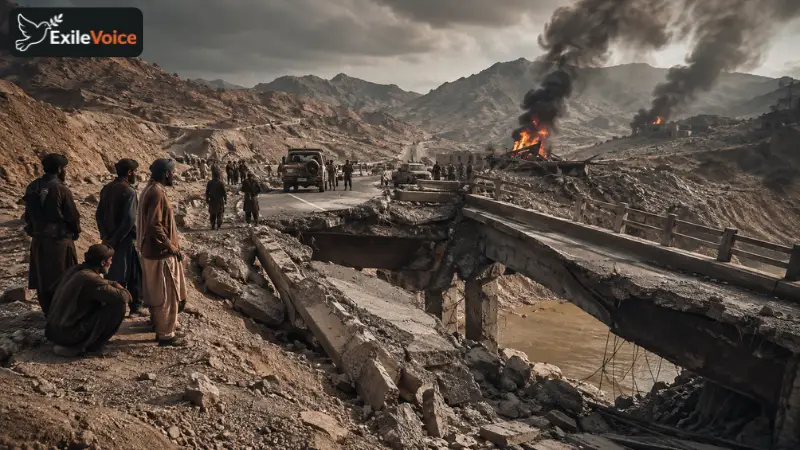
Balochistan is currently facing a severe security and governance crisis, characterized by the systemic destruction of critical infrastructure and a breakdown in public safety. Recent reports indicate that unidentified armed groups are systematically targeting and destroying small and large bridges across major highways, including the Quetta-Karachi highway. This campaign of sabotage has rendered movement across these vital transit routes extremely difficult, effectively isolating many regions and paralyzing local commerce.
The situation on the ground suggests a significant decline in the reach and effectiveness of security forces. Observers note a disturbing absence of visible security in areas where these incidents are occurring. In districts like Kalat and Khuzdar, the environment is described as being under a state of perpetual fear, with reports of curfews and severe restrictions on movement. Furthermore, the authorities have resorted to extreme measures such as suspending internet and cellular services, as well as halting train operations in Quetta, as an attempt to regain control. These actions, however, have significantly hampered the lives of ordinary citizens, cutting them off from essential services and communication.
The security vacuum in Balochistan is part of a broader, complex narrative involving regional stability and internal security management. While security forces have occasionally reported successful intelligence-based operations against insurgent elements, the frequency of infrastructure attacks suggests that these measures have not yet been sufficient to stabilize the region. The inability to ensure the safety of infrastructure and the lives of the populace points to a deeper systemic failure in governance and counter-insurgency strategy.
The regional impact of this crisis cannot be overstated. As the province struggles with these security failures, the economic and social consequences are becoming increasingly dire. The state's response, which largely focuses on restrictive measures rather than comprehensive development or political engagement, continues to be a subject of intense debate. Without a fundamental shift in approach, the cycle of violence and instability in Balochistan threatens to persist, posing a significant challenge to the national security architecture of Pakistan.