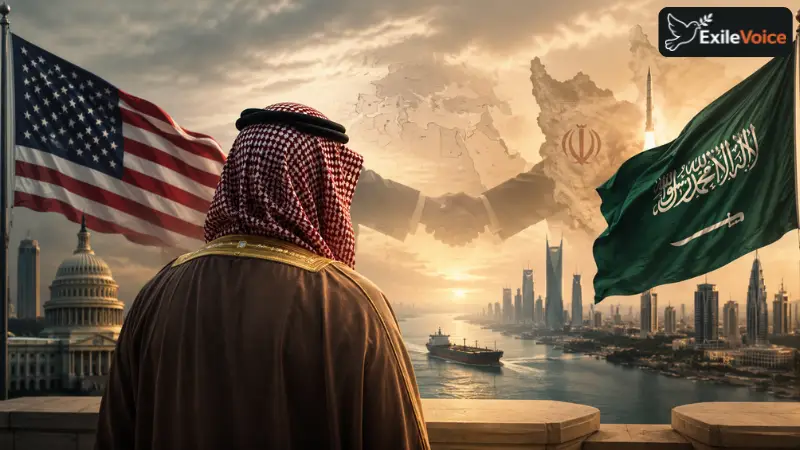
The shifting alliances in the Middle East have entered a new, critical phase, marked by a palpable cooling of relations between the United States and the Kingdom of Saudi Arabia regarding regional security. Recent reporting, notably highlighted in major US publications, suggests that Crown Prince Mohammed bin Salman (MBS) has significantly altered his stance on a potential military confrontation with Iran, moving away from a previously hawkish position encouraged by the United States.
Historically, the US-Saudi relationship has been anchored in an 80-year-old security partnership. However, when the US contemplated military operations against Iranian targets earlier this year, the Saudi establishment reportedly refused to authorize the use of their bases. This decision was not merely a diplomatic spat; it was a profound strategic calculation. The Saudi leadership arrived at the conclusion that the United States lacks the sustained capacity or the will to effectively protect Saudi interests in the event of an Iranian retaliatory strike. MBS and his advisors determined that becoming an active staging ground for a conflict would place the Kingdom at existential risk, with little guarantee of adequate defense against Tehran's sophisticated asymmetric capabilities.
This realignment is reflected in a broader regional cooling. While Saudi Arabia has not suddenly pivoted to become pro-Iran, there is a clear strategic distancing from US-led maximalist pressure campaigns. This reflects a maturation of Saudi foreign policy, where the Kingdom is increasingly prioritizing its own national security architecture over the regional directives of Washington. As the US and Iran continue indirect talks, mediated by Qatar, to manage nuclear tensions and regional maritime security, the "special relationship" is being redefined. The Saudi refusal to serve as a launchpad for US aggression signals that regional players are now calculating their risks independent of Western security umbrellas, a trend that may permanently alter the Middle East’s security landscape.