

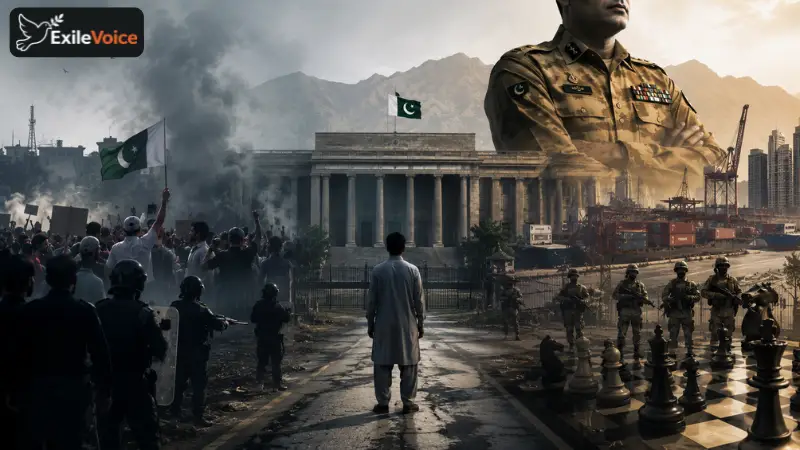
The contemporary political landscape of Pakistan is increasingly defined by what critics describe as a "hard state", a model of governance where security institutions exert profound influence over civil administration and public life. This structural shift, often attributed to the current leadership, has created a palpable friction between state apparatuses and the populace. The primary critique is that this approach prioritizes securitization over democratic dialogue, leading to an environment where dissent is met with systemic pressure rather than negotiation.
Professional insights suggest that when the state adopts a confrontational posture toward its own citizens, it creates a "crisis of legitimacy." Historical context, including references to previous administrations and their use of specialized security units, serves to contrast the current methodology with past norms of policing. There is a documented rise in anti-establishment sentiment, which observers argue is a direct reaction to the perceived heavy-handedness in handling civil unrest, protests, and the restriction of public discourse.
Furthermore, the integration of security agencies into economic decision-making, exemplified by entities like the Special Investment Facilitation Council (SIFC), has blurred the lines between defense and developmental governance. Economic analysts observe that while this integration aims to streamline investment, the lack of transparency and the perception of military dominance in economic corridors create uncertainty for both local and foreign investors. The core challenge for Pakistan’s stability remains the restoration of civilian governance structures, which would allow for democratic accountability and improve the country’s international image.

