

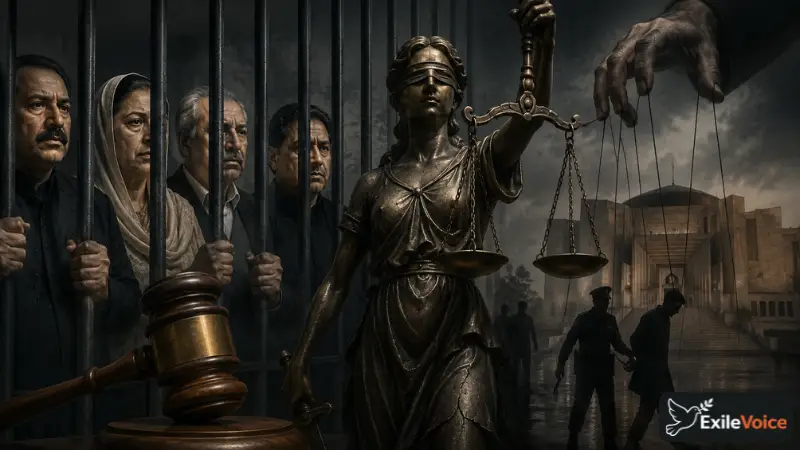
The current political landscape in Pakistan is increasingly defined by a series of contentious legal battles and judicial rulings that many observers argue serve to marginalize political opposition. A primary focal point is the ongoing litigation surrounding the events of May 9th, which has led to significant prison sentences for several high-profile members of the Pakistan Tehreek-e-Insaf (PTI). Leaders such as Ejaz Chaudhry, Dr. Yasmin Rashid, Mian Mehmood-ur-Rashid, and Omer Sarfraz Cheema have been handed ten-year sentences in connection with the Thana Mughalpura case.
These legal developments raise profound questions about the consistency and fairness of the judicial process. Critics point to the fact that while some individuals are acquitted in certain cases, they are immediately re-arrested or charged in new, seemingly repetitive cases, effectively ensuring their continued detention. The commentary highlights the frustration regarding this cycle, where the legal system is perceived to be utilized as a tool for political suppression rather than the impartial administration of justice.
Furthermore, the integrity of these trials is challenged by reports that investigative officers have sometimes testified that the accused played no active role in the incidents in question, yet convictions are still handed down. This has fostered a deep sense of cynicism regarding the judiciary’s autonomy. The broader political narrative suggests that the public mandate, as reflected in the February 2024 elections, stands in stark contrast to the legal actions being taken against these political figures. The persistent use of the legal system to undermine opposition leaders creates a perception of an entrenched, non-democratic process that contradicts the stated goals of institutional stability and the rule of law.

