The landscape of Pakistani journalism is currently facing a profound crisis of credibility, characterized by a drift away from investigative rigor toward a culture of narrative-driven commentary. Modern digital transformation has undoubtedly democratized information, allowing a broader spectrum of voices to contribute to the public discourse. However, this accessibility has also blurred the lines between genuine journalism and opinionated advocacy.
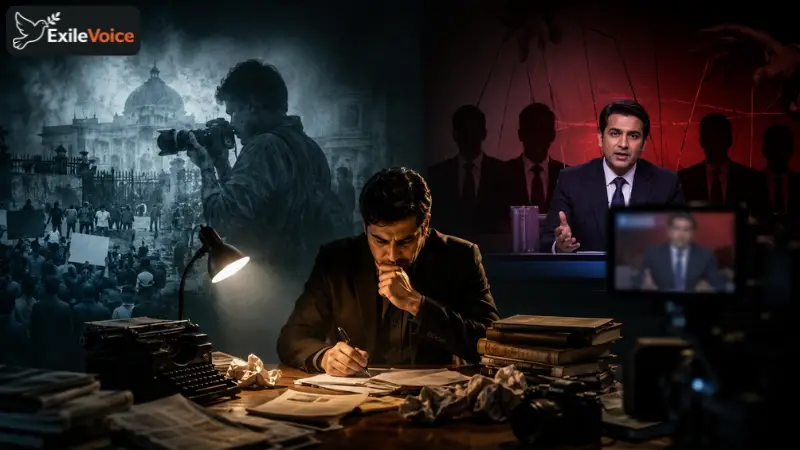
At the core of this debate is the role of prominent television personalities who, rather than holding power to account, appear to function as conduits for established political and institutional narratives. Insights from recent broadcast media suggest that prime-time political shows are increasingly serving as forums for manufactured consensus rather than critical inquiry. When seasoned analysts prioritize maintaining proximity to power structures over independent fact-finding, the fundamental "watchdog" function of the press is compromised.
The phenomenon of "narrative-building" has become a central concern. Instead of addressing substantive governance failures, economic stagnation, or systemic corruption, many prominent media figures focus on speculative political cycles. By framing current events through the lens of "establishment support" or "regime survival," these journalists effectively shape public perception to suit the interests of the status quo. This behavior is symptomatic of a broader malaise where the pursuit of professional standing and access replaces the responsibility to report the truth.
Furthermore, the lack of transparency in journalistic processes, such as the reliance on "off-the-record" briefings with shadowy figures, undermines the trust the public places in the media. True journalism requires a commitment to independent verification and a willingness to confront those in power, regardless of the personal or professional cost. As the media environment in Pakistan continues to evolve, the challenge remains for practitioners to reclaim their independence and refocus on the public interest, rather than acting as mouthpieces for institutional agendas. The future of democratic accountability in the country depends on the emergence of a more robust, inquisitive, and autonomous journalistic tradition.