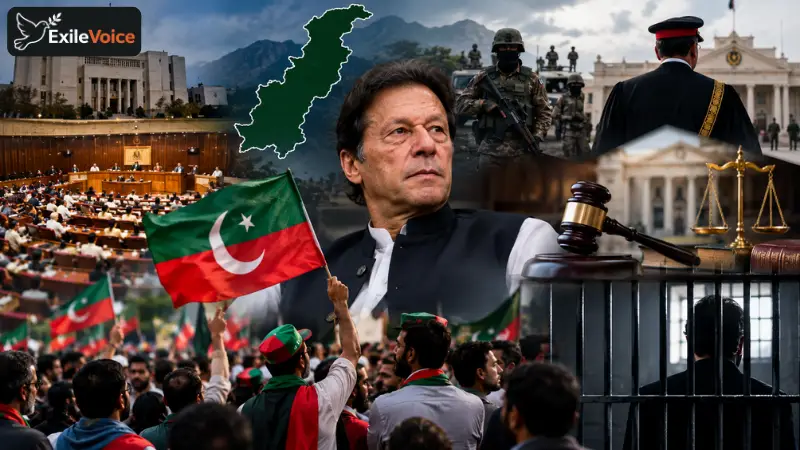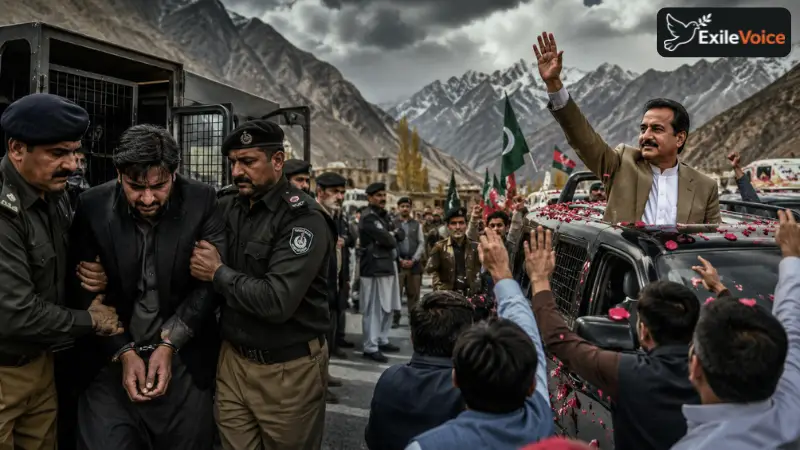
The upcoming elections in Gilgit-Baltistan have become the latest battleground for Pakistan’s contentious political landscape, throwing into sharp relief the ongoing tensions between state authorities, constitutional liberties, and opposition political factions. In a shocking series of events that political analysts are equating to historical colonial-era tactics, high-profile leaders and workers belonging to Pakistan Tehreek-e-Insaf (PTI), including prominent parliamentarian Junaid Akbar, were arrested, detained, and forcefully expelled from the region under the guise of regulatory enforcement. The official stance presented by the local administration and the Home Minister of Gilgit-Baltistan cited violations of the electoral code of conduct and a lack of required No Objection Certificates (NOCs) to hold public rallies. However, the heavy-handed nature of the state apparatus, culminating in political leaders being paraded in handcuffs and declared persona non grata within their own sovereign territory, points to a deeper, more troubling systemic trend of administrative engineering.
This forced expulsion, colloquially referred to as being "deported" from one's own province, evokes dark memories of the British East India Company’s legal frameworks, where political dissidents were routinely exiled or banned from entering specific cities and regions to stifle anti-colonial resistance. In contemporary terms, the selective application of these laws undermines the foundational principles of a democratic federation. While opposition leaders face immediate arrests and administrative expulsion for conducting political campaigns, figures representing the ruling coalition, such as Captain Safdar of the Pakistan Muslim League-Nawaz (PML-N), have reportedly been allowed to camp and conduct extensive political operations across Gilgit-Baltistan for weeks without facing similar legal barriers or procedural scrutiny. This stark asymmetry has fueled widespread allegations of institutional bias, leading senior legal and political experts to label the current environment a farce designed to guarantee a pre-determined electoral outcome.
The political fallout from this crackdown has sent shockwaves through the legislative branches. Senior leaders like Barrister Gohar and Sheikh Waqas Akram have publicly condemned the state’s high-handedness, declaring that blocking an opposition party from natural campaigning on the eve of an election is tantamount to pre-poll rigging. The strategic denial of the party symbol, combined with the physical removal of active campaign managers, effectively forces opposition candidates to run as disconnected independents, mirroring the structural disadvantages imposed during the general elections of February 2024. Observers note that while state-aligned media circles attempt to project an narrative of inclusive political space and a functional level playing field, the reality on the ground tells a story of systemic suppression.
Furthermore, the regional backlash threatens to disturb the social and political peace of Gilgit-Baltistan, a territory known for its strategic significance and its deeply hospitable yet fiercely independent population. Political stakeholders have warned that treating mainstream national politicians with such indignity will backfire, as regional voters traditionally penalize high-handed administrative interference at the ballot box. By prioritizing coercion over open political competition, the administrative machinery is not merely sidelining a single political party; it is systematically eroding public trust in the validity of the democratic process itself, deepening national polarization and casting a long shadow of illegitimacy over the incoming regional governance structure.