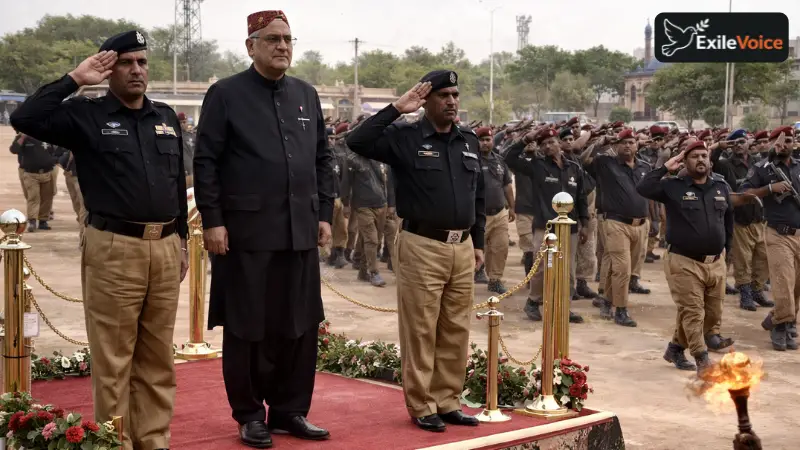
In a move that has sent shockwaves through Pakistan’s political landscape, the traditional pomp and circumstance of the Pakistan Day celebrations saw a marked departure from established protocol. President Asif Ali Zardari, who serves as the de jure Supreme Commander of the Armed Forces, found himself conspicuously absent from the primary military ceremonies in Islamabad. Instead, the President was relegated to receiving a modest salute from a Sindh Police contingent in Nawabshah, a spectacle that critics have described as a "mockery of the state's highest office."
The optics of the event were stark. Images of the President reviewing a parade of arguably unfit police personnel, whose lack of professional training was evident in their posture and coordination, contrasted sharply with the disciplined displays usually reserved for the head of state. This marginalization is not merely a logistical oversight but is seen as a deliberate signal from the military establishment, currently led by General Asim Munir. The underlying cause for this rift reportedly stems from a press release issued by the President’s House expressing condolences over the martyrdom of Iranian leader Dr. Ali Larijani. The military leadership, which has maintained a strictly transactional and guarded stance regarding the Iran-Israel conflict, viewed the President’s independent diplomatic gesture as a breach of coordinated policy.
The exclusion of the President from the main 23rd March activities highlights a deepening constitutional crisis. While the office of the President is meant to embody national unity and sovereign authority, the current reality suggests a "de facto military raj." The President's retreat to his family residence in Nawabshah for official duties indicates a lack of synergy between the civilian head of state and the military command. This "Gudda-Guddi" (doll-like) wedding-style parade, as described by some commentators, serves as a painful reminder of the diminishing stature of civilian institutions under the shadow of the Form 47 government. As the country moves toward a potential 28th Constitutional Amendment, the further erosion of presidential powers and the centralization of authority within the Army Chief's office appear to be the new normal in Pakistani politics.