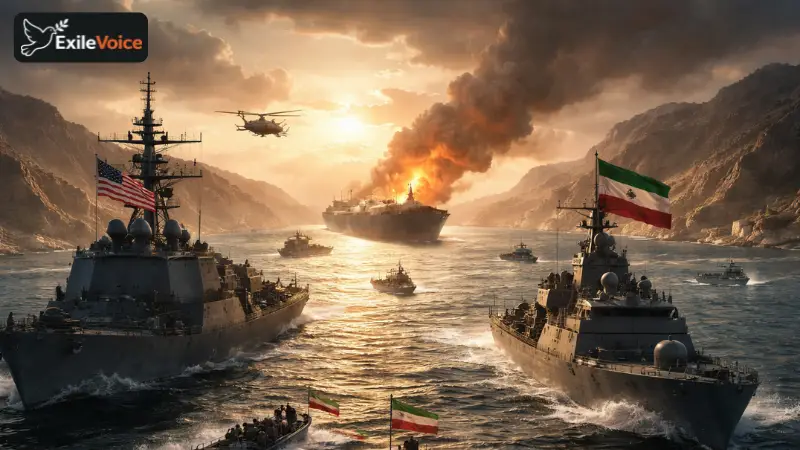
The current conflict in the Middle East, specifically the escalating tensions between the United States and Iran, marks a significant turning point in global geopolitics. For decades, the United States maintained an undisputed hegemony over the region’s maritime corridors. However, recent developments suggest that this era of dominance is rapidly drawing to a close. The strategic "chokepoint" of the Strait of Hormuz has become the primary stage for this power shift, as Iran and Oman propose a revolutionary new administrative framework that could permanently alter international trade dynamics.
A core development discussed is the joint proposal by Iran and Oman to establish a "Strait of Hormuz Authority." This initiative seeks to move away from international maritime conventions toward a regional supervision model, similar to the Suez Canal Authority in Egypt. Historically, the U.S. has argued that the Strait is an international waterway; however, the geography of the narrowest point, where the western shore belongs to Oman and the eastern to Iran, provides these two nations with a potent legal and physical argument for joint sovereignty. If successful, this move would not only grant regional powers control over a massive portion of global oil transit but also allow them to levy tolls, with rumors suggesting fees as high as $1 million to $2 million per ship.
The failure of the United States to secure a United Nations Security Council resolution to intervene in the Strait further highlights this decline. While the U.S. sought a mandate for a "voluntary multinational force" to reopen the passage, it faced stiff resistance not just from traditional rivals like Russia and China, but also from France. This internal fracturing of the "Western" alliance suggests that the collective identity of "The West" is being replaced by regional interests. European nations, through recent clandestine meetings in Helsinki, have signaled a "Nordic Table" agreement, asserting that Middle Eastern wars are no longer their wars.
Furthermore, the military strategy employed by the Trump administration, characterized by the use of AI-driven targeting systems like Project Maven, has drawn intense ethical and legal scrutiny. Recent strikes on civilian infrastructure, such as the Alborz Bridge connecting Tehran to the Caspian coast, are viewed by international legal experts as potential war crimes rather than strategic military necessities. By targeting a bridge with primarily civilian and commercial value, the U.S. is seen as attempting to "terrorize" the Iranian administration into a deal. Instead of weakening Iran, these actions appear to be galvanizing Iranian resolve and increasing their political leverage on the world stage.