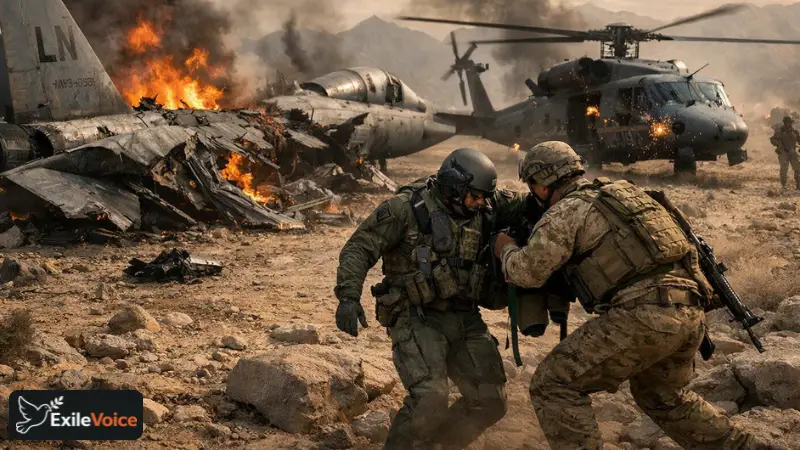
The recent downing of a U.S. F-15E Strike Eagle over southwestern Iran marks a significant and sobering shift in the ongoing conflict. For weeks, official narratives from Washington suggested that Iranian air defense capabilities had been effectively neutralized, with claims reaching as high as 100 percent destruction of key radar and missile batteries. However, the loss of a 90 million dollar multi-role fighter, a platform renowned for its dual-role capabilities and advanced avionics, directly contradicts these assertions and exposes critical vulnerabilities in the current coalition strategy.
The F-15E Strike Eagle is not merely a fighter jet; it is often referred to as a "bomb truck" within military circles due to its ability to carry up to 23,000 pounds of munitions. It operates with a two-person crew: a pilot in the front seat and a Weapons System Officer (WSO) in the back. The WSO is essential for managing the complex array of sensors, electronic warfare suites, and precision-guided munitions that the aircraft deploys. The fact that such a sophisticated machine was successfully targeted by Iranian defenses indicates that Tehran maintains high-end anti-access/area denial (A2/AD) capabilities, likely supported by mobile units that evaded initial bombardment.
This incident has triggered an immediate and high-stakes search-and-rescue (SAR) operation. Reports indicate that while one crew member has been successfully recovered by U.S. forces, the fate of the second remains uncertain. This creates a precarious diplomatic and military situation. If the missing airman is captured, they become a high-value Prisoner of War (POW), granting Iran significant leverage and potentially echoing the historical trauma of the 1979 hostage crisis. Furthermore, the escalation has reportedly extended to the rescue mission itself, with claims that an American helicopter involved in the extraction was damaged by hostile fire. The involvement of global powers like Russia and China, providing diplomatic cover at the UN and potentially sharing satellite intelligence, suggests that this "regional excursion" is rapidly evolving into a conflict with global proportions.