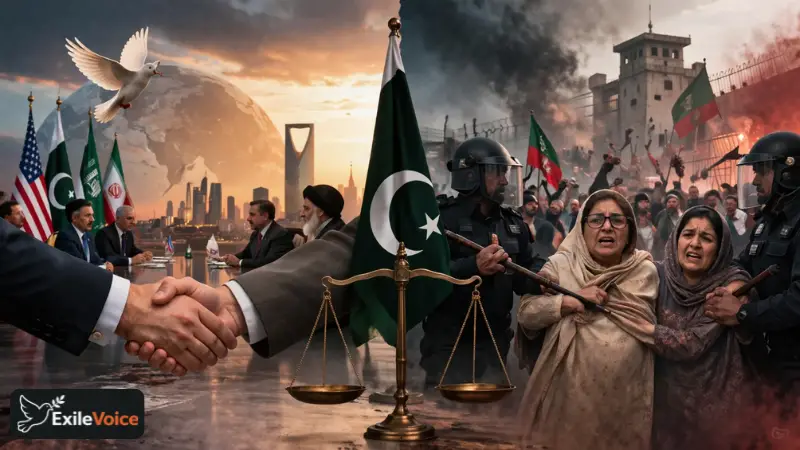
The duality of the Pakistani state has never been more apparent than in the last 48 hours. While the nation’s leadership receives international accolades for preventing a war between Iran and the United States, its domestic front is marred by a severe crackdown on political dissent. The arrest of Uzma and Aleema Khan, the sisters of former Prime Minister Imran Khan, during a protest at Adiala Jail has cast a dark shadow over the government’s diplomatic triumphs. This contrast highlights the ongoing struggle between Pakistan’s "hard state" ambitions and its fragile democratic institutions.
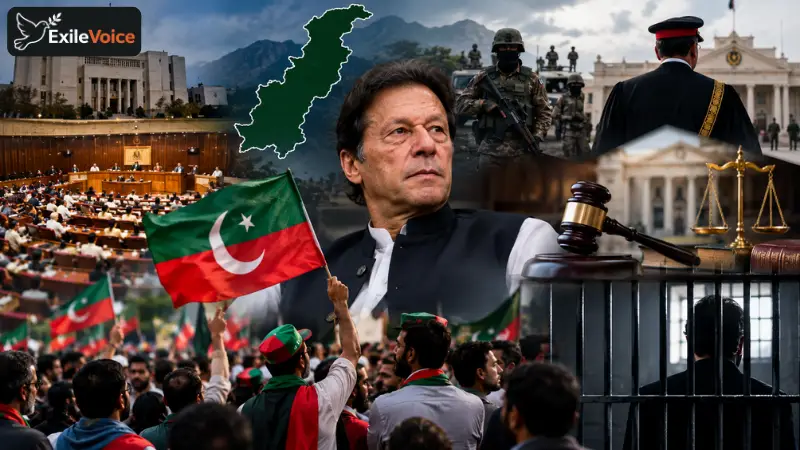
The arrests were made under the enforcement of Section 144, which prohibits gatherings in certain areas. The Pakistan Tehreek-e-Insaf (PTI) had organized a protest on April 7, a date the party is attempting to turn into a symbol of resistance. Unlike the well-known anniversaries of May 9 or February 8, April 7 is being framed as a day to regain political momentum as international events have largely overshadowed the plight of Imran Khan. The state’s response, involving baton charges, vehicle damage, and the detention of elderly women, has been widely criticized by human rights advocates and political analysts as an unnecessary display of force.
This internal suppression creates a complex narrative for General Asim Munir and Prime Minister Shehbaz Sharif. On the global stage, they are being seen as "deliverers" of peace, successfully navigating the temperamental personalities of leaders like Donald Trump and the Iranian leadership. Yet, at home, they are accused of presiding over an "installed" or "puppet" administration that relies on military backing rather than public mandate. The treatment of political prisoners and the denial of basic rights to family members of opposition leaders continue to fuel a sense of deep-seated grievance among a large section of the population.
The "Islamabad Accord" may improve Pakistan’s standing in Washington and Riyadh, but it does little to address the "internal fissures" mentioned by critics. Historical parallels are being drawn to the era of Yahya Khan, who was instrumental in facilitating the opening of relations between the U.S. and China while simultaneously overseeing a brutal internal conflict in what was then East Pakistan. The concern today is that a focus on external geopolitical success is being used as a shield to ignore or justify the erosion of constitutional rights at home.
As the government prepares for high-profile peace talks with the U.S. and Iran, the domestic political temperature remains at a boiling point. The health of political prisoners, such as Ijaz Chaudhry, who is reportedly suffering from stage-three kidney disease, remains a point of intense concern for the opposition. The "balanced" coverage by independent media remains the only avenue for highlighting these issues as mainstream outlets remain under significant pressure. Ultimately, Pakistan’s long-term stability depends not just on its ability to mediate between foreign powers, but on its capacity to reconcile with its own people and respect the rule of law.