In the rapidly evolving landscape of South Asian geopolitics, a provocative question has emerged: has Pakistan successfully sidelined India on the global diplomatic stage? For decades, the narrative of the subcontinent was dominated by India’s rising economic stature and its burgeoning partnership with the West, while Pakistan was often viewed through the lens of internal instability and "polycrisis." However, recent developments suggest a sophisticated recalibration of Islamabad’s foreign policy, one that seeks to leverage its unique geographic position and historical ties to create a "new normal" where it is no longer just a reactionary player to New Delhi’s moves.
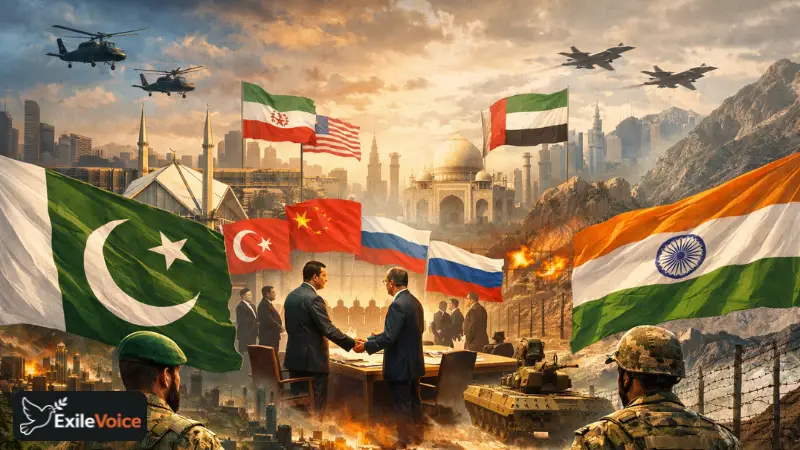
The analysis of this shift begins with Pakistan’s re-emergence as a critical intermediary in Middle Eastern conflicts. While India has focused on its "Link West" policy, strengthening ties with Israel and the Gulf monarchies, Pakistan has quietly positioned itself as a bridge between Washington and Tehran. In the wake of escalating tensions in the Middle East, Islamabad’s ability to talk to players that India cannot, or will not, reach has granted it a renewed diplomatic leverage. This "intermediary" status is not merely about conflict resolution; it is a strategic maneuver to demonstrate to the United States and the European Union that Pakistan remains an indispensable security partner, despite its domestic economic woes.
Furthermore, there is an observable effort by the Pakistani establishment to bypass the traditional bilateral gridlock with India by engaging more robustly with multilateral forums and regional blocks. By strengthening its "all-weather" friendship with China and exploring new security paradigms with Turkey and Russia, Pakistan is attempting to dilute India's influence in its immediate neighborhood. This strategy of "regional integration without India" is a bold gamble. It relies on the premise that as long as Pakistan can provide security guarantees and diplomatic channels for global powers, its relevance will persist regardless of India’s economic lead.
However, this perceived sidelining of India is fraught with challenges. India’s global footprint, backed by a massive economy and a powerful diaspora, remains a formidable barrier. The "Operation Sindoor" and other border tensions serve as constant reminders that the military dimension of the Indo-Pak rivalry can easily disrupt any diplomatic gains. For Pakistan to truly sideline India, it must move beyond short-term tactical wins as a "peacemaker" and address the systemic economic issues that currently limit its long-term strategic depth. The story of 2024 and 2025 is not just about who is winning the shouting match, but who is building the more sustainable regional architecture.