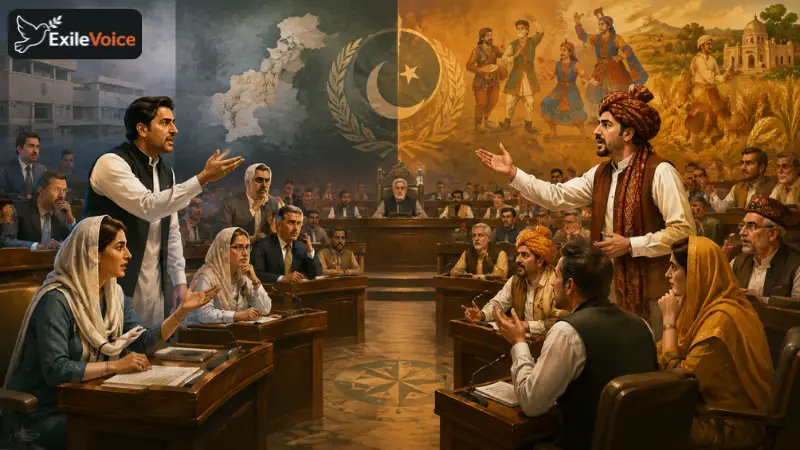
The role of regional languages in Pakistan’s legislative chambers has become a contentious point of discussion, highlighting deep-seated tensions regarding national identity and parliamentary decorum. Recently, members of the National Assembly have faced criticism for using Punjabi during legislative sessions, a practice that some argue violates the expected decorum of the House.
Proponents of this view, such as Member of National Assembly (MNA) Nausheen Iftikhar, have characterized the use of Punjabi in the chamber as inappropriate, suggesting that the Assembly should not be treated as a "film city" for theatrics. This stance, however, has triggered a significant backlash from those who view such rhetoric as a discriminatory attack on the cultural heritage of the country’s largest linguistic group, which constitutes approximately 65% of the population.
The controversy touches upon a broader socio-political phenomenon: the gradual erosion of regional languages among the urbanized elite and the middle class in favor of Urdu and English. Historically, Punjabi has been the language of profound literary traditions, celebrated by saints and poets alike. Yet, in modern political discourse, it has often been sidelined or marginalized, leading to a disconnect between the populace and the linguistic environment of national institutions.
Critics of the current political mindset argue that this aversion to regional languages stems from an "elitist" perspective that equates regional dialects with a lack of sophistication. Interestingly, the political hypocrisy surrounding this issue is stark, as some politicians who condemn the use of Punjabi in one instance have themselves employed the language in previous sessions for populist appeal. This inconsistency underscores a recurring trend in Pakistan’s political arena, where cultural symbols are often used for strategic advantage rather than genuine representation.
The debate is not merely about language; it is about the inclusive nature of the state and whether the national assembly can accommodate the linguistic diversity that makes up the fabric of Pakistani society. As the nation continues to navigate its complex identity, the tension between maintaining official decorum and honoring the linguistic roots of its citizens remains a critical challenge for the legislative process.