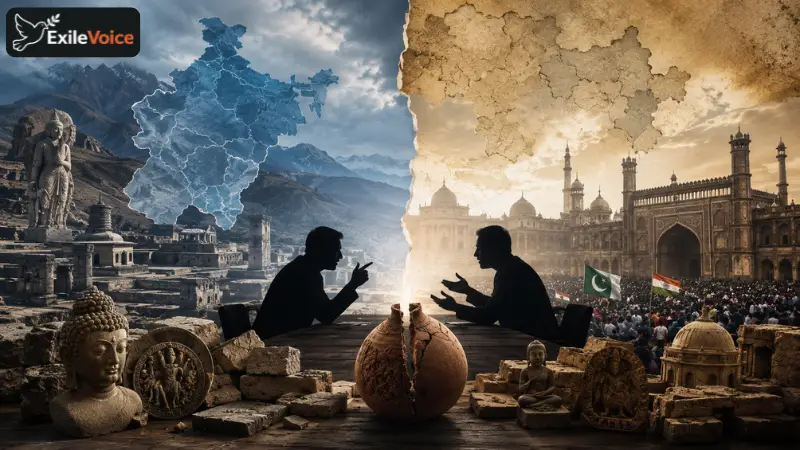
Contemporary international discourse is frequently complicated by competing claims over historical legitimacy, often triggered by diplomatic visits or archaeological commentary. A recent example involved an Australian diplomat’s positive remarks regarding the historical significance of Taxila in Pakistan, which inadvertently ignited a fierce debate regarding national origins and historical continuity.
Critics from outside the region have frequently challenged the historical depth of certain nations, often arguing that modern states formed in the 20th century lack the deep-rooted cultural heritage they claim. However, this perspective is countered by the argument that modern geopolitical boundaries do not necessarily negate the millennia-old history of the regions they now encompass. The debate often centers on how history is utilized to confer legitimacy on contemporary statehood.
The assertion that a nation is merely a product of its most recent borders ignores the complex, multi-layered history of the Indian subcontinent. Scholars note that the concept of a unified "India" or "Pakistan" is deeply tied to colonial administrative structures and the subsequent partitions that followed. Consequently, arguing over "who owns history" is viewed by many as an attempt to leverage the past for current political gains, rather than an objective analysis of historical fact. Such debates underscore the necessity of moving beyond narrow, exclusionary narratives to appreciate the diverse and shared historical experiences that have shaped these nations, regardless of modern political demarcation.