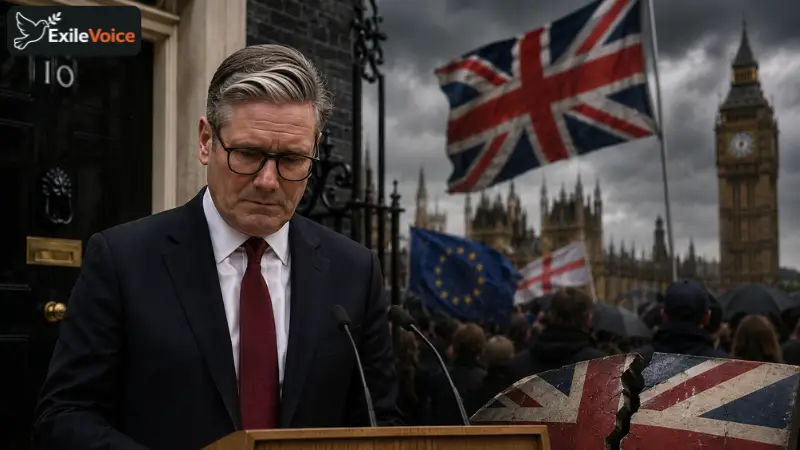
The political landscape of the United Kingdom faced a seismic shift with the resignation of Prime Minister Sir Keir Starmer. Following a landslide victory in 2024, which marked the Labour Party's return to power after roughly 15 years, Starmer’s tenure proved to be short-lived, ending in unexpected resignation just two years into his term.
Starmer, a former barrister and human rights lawyer, was credited with restructuring the Labour Party and leading them to a dominant electoral victory. However, despite his efforts to improve the investment climate and the National Health Service (NHS), he faced a crisis of popularity. In a somber resignation speech outside 10 Downing Street, Starmer acknowledged that he had lost the confidence of his party and expressed the belief that he could not lead Labour to success in the next general election.
The underlying cause of this instability traces back to the aftermath of Brexit. Since the 2016 referendum, the UK has experienced significant economic volatility, with Starmer being the latest in a rapid succession of prime ministers, including David Cameron, Theresa May, Boris Johnson, Liz Truss, and Rishi Sunak. The post-Brexit economic environment has failed to stabilize, leading to constant political churn. Furthermore, shifting demographics and immigration patterns, specifically the rise in immigration from outside the EU, have fueled domestic frustration, strengthening movements like Nigel Farage’s Reform Party. While potential successors like Andy Burnham are lauded for their charismatic, "warm-blooded" connection with the public, the structural instability of the UK post-Brexit remains the primary challenge for whoever assumes the mantle of leadership.