

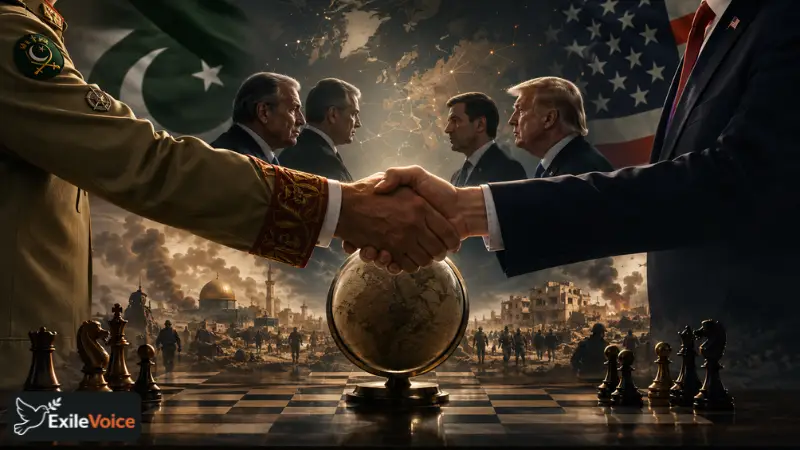
The contemporary diplomatic landscape is experiencing a period of intense volatility, characterized by the intersection of personal relationships, national interests, and unpredictable leadership styles. A primary example of this shifting dynamic is the complex relationship between the Pakistani leadership, specifically Army Chief General Asim Munir, and the US team under President Donald Trump.
Observations from recent diplomatic events suggest that the personal rapport developed between US officials, such as Steven Witkoff and Jack Witkoff, and General Asim Munir has become a focal point of international scrutiny. US Vice President Jerry Vance has publicly praised General Munir, signaling a strategic reliance on Pakistan to influence regional outcomes, including the behavior of Iran and Hezbollah.
However, this reliance on personal diplomacy has begun to attract skepticism. Analysts note that such intense personal alignment, while perhaps effective in the short term for specific objectives, faces "diminishing returns." The over-exposure of this relationship has turned it into a subject of public critique rather than a reliable tool for statecraft. As international observers in Europe and the United States begin to take note of the unconventional nature of these ties, the perceived efficacy of these "special relationships" is being tested.
Furthermore, the broader geopolitical context, marked by the involvement of various power brokers in the Middle East, complicates these efforts. The struggle to contain regional conflicts, coupled with the pressure from Zionist advocacy groups within the US to shape foreign policy, places leaders like General Munir and Vice President Vance in a delicate position. As the world watches, the sustainability of these informal alliances, and their ability to produce tangible results, remains an open question in an era defined by rapid political shifts and the necessity for genuine, institution-based diplomatic frameworks.

