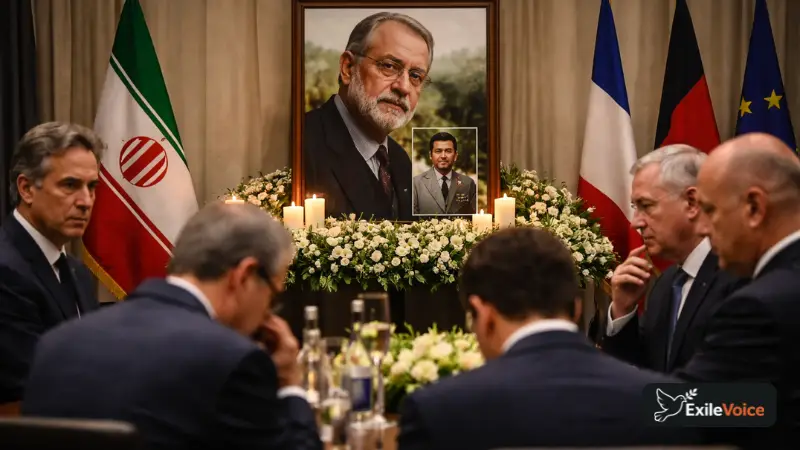
The recent assassination of Dr. Ali Larijani, the head of Iran's Supreme National Security Council, represents a catastrophic rupture in the delicate fabric of Middle Eastern diplomacy. Larijani was far more than a military figure or a high-ranking bureaucrat; he was the primary strategic architect of Iran's modern engagement with the world. His elimination, orchestrated by Israeli intelligence during an airstrike that also claimed the lives of Brigadier General Gholamreza Soleimani and Larijani’s own son, Murtaza, signals the end of an era of pragmatism.
Larijani’s unique profile made him an irreplaceable asset in the quest for regional stability. With a PhD in Western philosophy focusing on the works of Immanuel Kant, he spent decades attempting to build bridges of understanding between Islamic governance and Western enlightenment ideals. He was a man who understood the nuances of the West, spoke multiple languages fluently, and had deep-seated connections within European and American diplomatic circles. As the original architect of the 2015 Joint Comprehensive Plan of Action (JCPOA), he possessed the intellectual and political capital to navigate the complexities of nuclear negotiations.
The timing of this strike is particularly calculated. It occurred just as the United States, under the current administration, found itself increasingly isolated from its traditional allies. European powers, including Britain, France, and Germany, have recently distanced themselves from Washington’s kinetic approach to the Persian Gulf, refusing to provide the legitimacy for a military coalition in the Strait of Hormuz. By removing Larijani, Israeli strategy has effectively decapitated the only Iranian leader capable of providing a "diplomatic off-ramp" for the Trump administration.
Larijani was the de facto successor to Supreme Leader Ali Khamenei, possessing the "systems knowledge" required to manage the diverse factions within the Iranian state. While the official succession has pointed toward Mujtaba Khamenei, insiders suggest that Larijani was the one holding the actual reins of policy execution. Without his steady hand, the Iranian system is now increasingly reactive and leaderless, making it susceptible to the same kind of internal chaos previously witnessed in Syria and Libya. This "decapitation strategy" ensures that instead of a negotiated settlement, the region remains locked in a cycle of escalation that serves specific ideological interests over global security.