

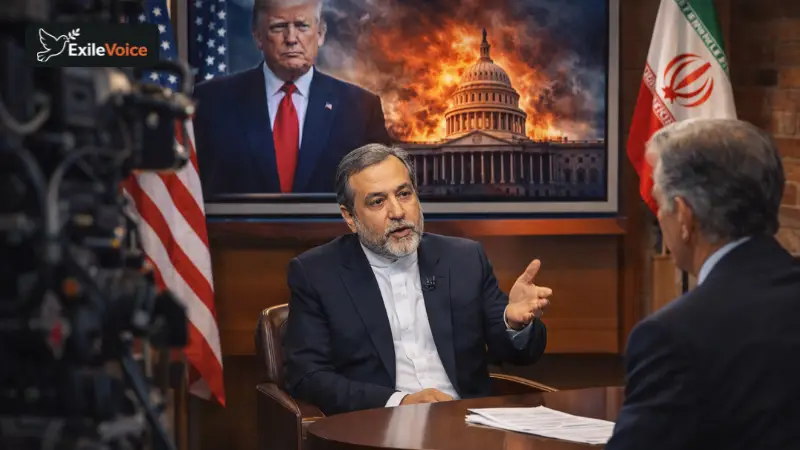
The Middle Eastern theater is currently witnessing a masterclass in strategic communication, orchestrated not by Washington, but by Tehran. In a recent and highly calculated move, Iranian Foreign Minister Abbas Araghchi appeared on a major American television network, CBS, to deliver a message aimed directly at the American public and the global community. This interview marks a significant shift in Iranian strategy, moving from reactive defense to proactive narrative shaping.
Araghchi’s primary objective was to debunk rumors surrounding a potential ceasefire. By engaging with a "Legacy Network" that has a reach spanning a century, Tehran is bypassing official diplomatic channels to speak directly to the American voter. The strategy is clear: by presenting a calm, articulate, and rational front, Iran hopes to pressure the Democratic process in the United States, encouraging citizens to question the legality and necessity of the ongoing conflict.
A central pillar of this rhetoric is the characterization of the Trump administration’s motives. Araghchi specifically framed President Trump’s military actions as a "war of choice" conducted for personal gratification or "fun." This is a sharp psychological maneuver that leverages the President's own past rhetoric regarding military "victories" and "destruction." By labeling these actions as potential war crimes and highlighting the lack of humanitarian mercy in U.S. military policy, Iran is attempting to alienate the U.S. administration from its own legal and moral standards.
The complexity of this diplomatic dance extends to the Strait of Hormuz. While the U.S. attempts to internationalize the conflict by inviting nations like China, Japan, and Italy to send naval vessels to secure the passage, Iran is playing a subtler game. Tehran has reportedly been in contact with several countries behind the scenes, offering safe passage for their specific vessels. This was exemplified by the recent release of Indian tankers. This "fragmentation strategy" aims to break the unity of the U.S.-led coalition by dealing with nations individually, proving that Iran, not the U.S. Navy, currently holds the keys to the world's most vital oil artery.
Furthermore, the interview addressed the "missing" nuclear material. Araghchi utilized a brilliant tactical denial, citing President Trump’s own claims of having "obliterated" Iran’s nuclear program. If the U.S. claims the program is destroyed, Iran argues, then any highly enriched uranium must naturally be buried under the rubble, thereby absolving Tehran of current accountability while mocking the accuracy of U.S. intelligence.

