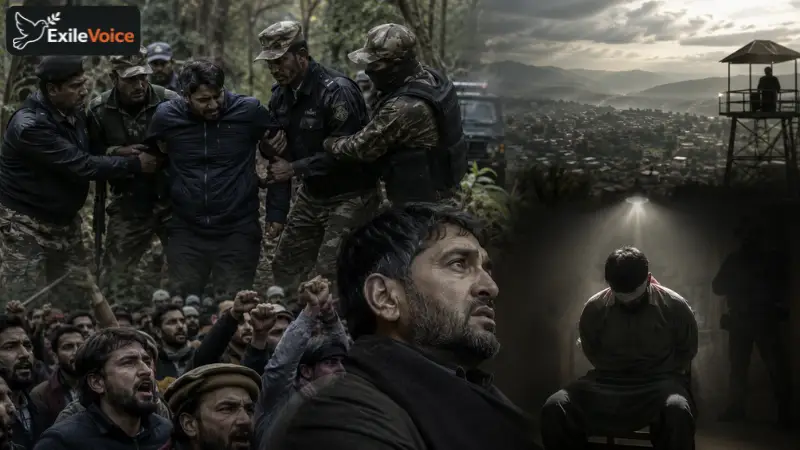
The recent arrest of Shoukat Nawaz Mir, a figure central to the protests in Azad Kashmir, has ignited a firestorm of controversy, raising profound questions regarding human rights, transparency, and the state’s handling of political dissent. Video footage circulated recently provides chilling evidence of the operation, showing security forces, including law enforcement and personnel who appear to be Rangers, apprehending Mir from within a forested area. Despite the clear visuals of the arrest, authorities have faced significant criticism for the lack of formal acknowledgment and the failure to present him before a court, effectively rendering him a "missing person."
The circumstances surrounding the operation suggest a degree of coordination that has fueled speculation of betrayal or internal intelligence. Observers note that Mir was allegedly en route to a protest sit-in in Rawalakot when he was intercepted, leading to theories that his movements were leaked. The silence from senior government officials, including Azad Kashmir’s Prime Minister Faisal Mumtaz Rathore, initially added to the confusion, though subsequent confirmations by some regional ministers have clarified his detention.
This event is not merely an isolated arrest; it is viewed by many as a precursor to coerced confessions, a tactic frequently criticized by civil rights advocates. There is widespread apprehension that Mir may soon appear on television to denounce the Kashmir Action Committee or provide statements under duress, possibly accusing external entities like India’s RAW of instigating the protests. Such "statements of convenience" serve to discredit organic movements by framing them as foreign-led conspiracies.
Compounding this situation is the government's contradictory stance on the very issues Mir championed. Shortly after his arrest, Prime Minister Rathore publicly labeled the issue of "refugee seats" as problematic and open to reform, ironically, the same demand that had triggered the harsh crackdown on protesters like Mir. This shift in rhetoric, occurring only after the suppression of the movement’s leadership, highlights a troubling trend: the marginalization of voices that seek genuine policy changes until those voices are silenced, at which point the establishment co-opts the demands for its own political survival.
As the political situation in Azad Kashmir remains fluid, the arrest of Shoukat Nawaz Mir serves as a stark reminder of the fragile balance between state control and the fundamental rights of its citizens. The handling of this case will likely define the trajectory of future protests and the public's trust in regional governance.