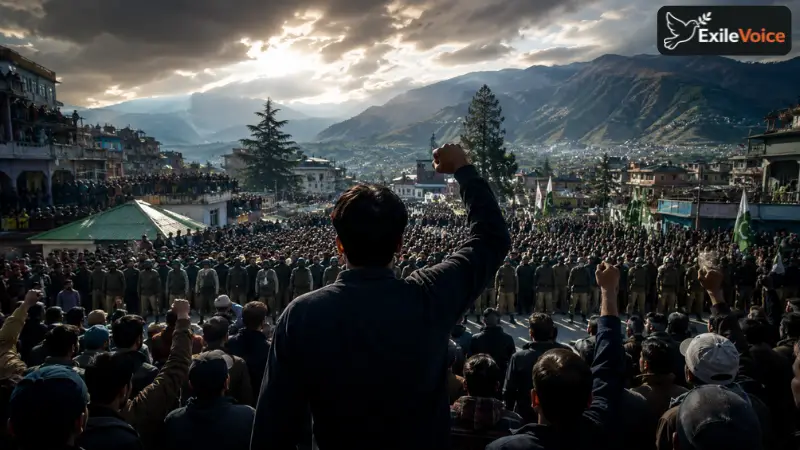
The region of Azad Jammu and Kashmir (AJK) is currently grappling with a profound socio-political crisis that has transcended internal boundaries, drawing intense scrutiny from international observers and, notably, political figures within Indian-administered Kashmir. The unrest, characterized by widespread public protests and civil disobedience, stems from deep-seated frustrations regarding governance, resource allocation, and the perceived heavy-handed approach of the security apparatus.
At the heart of the conflict is a dispute over the influence of establishment forces in AJK’s local political structures. Critics argue that the strategic utilization of specific legislative seats, intended to represent migrants, has been manipulated to install figures who prioritize the agendas of external stakeholders over the rights and needs of the local populace. This systematic suppression, critics claim, has ignited a backlash, transforming peaceful citizens into active protesters who are demanding basic fundamental rights, economic justice, and an end to state-sponsored crackdowns.
The narrative from the protesters is one of profound disillusionment. Despite being historically aligned with the state, the local population finds itself at odds with the current administration, which has labeled these movements as threats to national security. The situation has reached a critical juncture where community leaders are now explicitly appealing to the Pakistani public, urging them to recognize the legitimacy of their struggle and to stand in solidarity against what they define as the disenfranchisement of a region they call the "jugular vein" of Pakistan.
Perhaps most surprisingly, the crisis has garnered attention from figures on the other side of the Line of Control. Farooq Abdullah, a senior leader of the National Conference in Indian-administered Kashmir, has publicly commented on the situation, urging international bodies, including the United Nations Human Rights Committee, to investigate the allegations of abuse and suffering in the region. This external attention underscores the severity of the crisis and highlights the potential for the instability in AJK to influence broader regional perceptions of human rights and governance. The path forward remains uncertain, as the government continues to rely on restrictive measures, including the potential reinstatement of legal cases against protesters, rather than addressing the core grievances driving the unrest.